


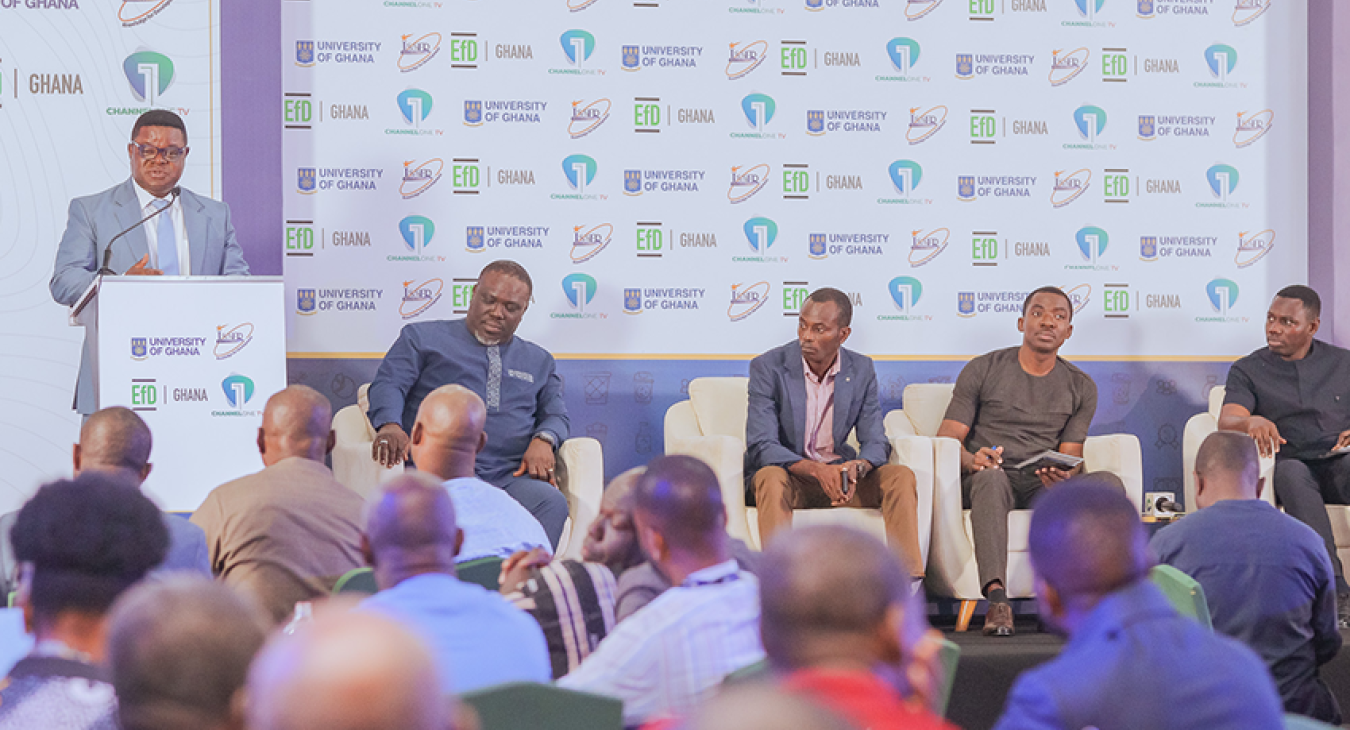
The Institute of Statistical, Social and Economic Research (ISSER) convened a high-level dissemination and stakeholder engagement event to share findings from a study on waste management and sanitation as critical pillars of sustainable development. Titled “An Economic Analysis of the Benefits of Adequate Investment in Waste Management and Sanitation in Ghana,” the study provides an economic assessment of the costs of inaction and the significant social and economic returns that strategic investments in waste and sanitation can unlock.
Held on 26 February 2026 at the Alisa Hotel, the event brought together an exceptional cross-section of policymakers and sector leaders, most notably members of at least five Parliamentary Select Committees. These included the select committees for Local Government, Environment, Sanitation, Finance, and Health. Beyond Parliament, the event also drew Municipal Chief Executives (MCEs), Chief Directors of government ministries, the Environmental Service Providers Association (ESPA), Environment for Development Ghana (EfD Ghana), civil society organisations in the WASH and environment sectors, and members of the media. The gathering reflected the urgency and cross-sector relevance of the study, particularly in light of rapid urbanisation, population growth, and rising waste volumes placing severe pressure on Metropolitan, Municipal, and District Assemblies (MMDAs).
“This study demonstrates that sanitation is not merely a social service issue—it is an economic imperative. When we quantify the costs of inaction, the case for strategic investment becomes undeniable. Bringing legislators, regulators, municipal authorities, private sector actors, researchers and civil society together in one room highlights the importance of coordinated national action and evidence-led policymaking,” said Peter Quartey, Principal Investigator of the study.
Evidence-based case for investment

The research team detailed the financial, health, productivity, and environmental costs associated with inadequate waste management and sanitation systems. The study makes a compelling economic case for repositioning sanitation and waste management as high-yield national investments aligned with Ghana’s development priorities and the Sustainable Development Goals (SDGs). The findings challenge the traditional view of sanitation as a service expenditure, presenting it instead as a systems-level investment critical for national development.
A template for collaboration and action

Following the presentation, researchers engaged participants in a Q&A session and panel discussion moderated by Bernard Avle, General Manager of Citi FM and Channel One TV. Panelists included Prof. Peter Quartey (ISSER), Godfred Fiidi Boadi, Head of Climate Action, Sustainability and Partnerships at the Ministry of Sanitation and Water Resources (MSWR), Ama Ofori Antwi (ESPA), and Zuweira Ibrahima, Member of Parliament for Salaga South.

Discussions emphasised the urgent need for stronger regulatory frameworks, improved data systems, and sustained financing mechanisms to reduce inefficiencies and losses in the sanitation sector. Participants also highlighted the role of institutional accountability and oversight to ensure that investments deliver measurable impact.
“We will take it as a committee and use it to foster further collaboration with ISSER,” Hon. Zuweira Ibrahima stated, noting that the report would serve as a template for the Water, Sanitation and Health Committee.
She further emphasised the importance of expanding the study’s coverage to additional districts to strengthen representativeness and deepen understanding of Ghana’s waste and environmental landscape, saying, “We cannot do effective analysis without good data.”
Among the key takeaways was the assertion that “sanitation is a key economic indicator,” warranting targeted and sustained investment.
Positioned to inform policy
A policy brief summarising the key findings, alongside a comprehensive project report, was distributed to participants. Several attendees remarked that it was the first time they had encountered research so directly positioned to inform policy decisions, a sentiment echoed by the moderator, who invited applause for the researchers’ work.

Led by ISSER in collaboration with EfD Ghana and Channel One TV, the dissemination and stakeholder event not only disseminated key research findings but also reinforced the bridge between evidence and policy, demonstrating how rigorous economic analysis can shape national conversations and drive strategic investment in sanitation and waste management in Ghana.
Selected online reports on the event can be accessed below:
Stakeholders push for independent sanitation regulator - This will block GH¢6.2bn losses – Graphic online. Read more
GHȼ6.2bn lost annually to poor sanitation – ISSER Study - B&FT. Read more
Poor waste management costs Ghana over GH¢6.2bn annually — Report – Ghanaian Times. Read more
Ghana needs more investment in waste management and sanitation - Ghana News Agency (GNA) – Read more
- Log in to post comments