

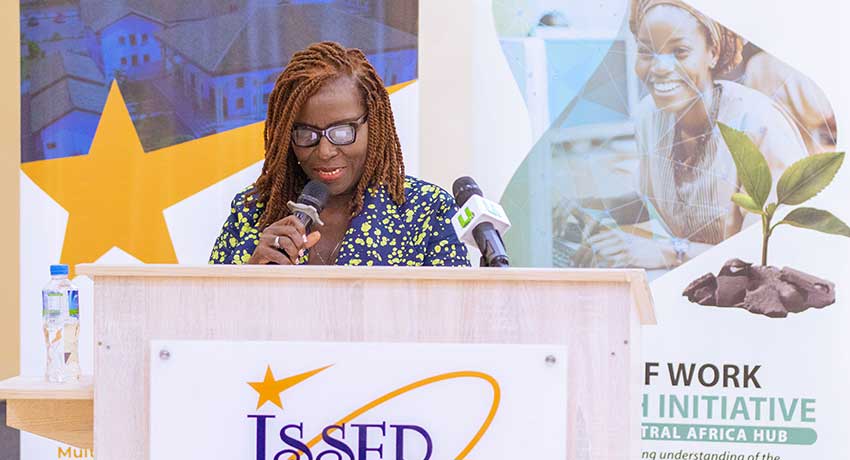

Mrs Edwina Assan, Founder of EDTEX Ltd., delivers the keynote address on digital platforms as pathways to youth inclusion in Ghana’s textile and apparel sector.
Digital platforms are creating new opportunities for young people in Ghana’s textile and apparel (T&A) sector, from online marketing and skills development to financial inclusion and access to wider markets. However, realising their potential to generate decent and sustainable employment requires addressing barriers such as limited digital skills, poor connectivity, inadequate financing and online security risks.
These issues were explored at a stakeholder engagement meeting organised by the Institute of Statistical, Social and Economic Research (ISSER) under its Future of Work Research Initiative, Central and West African hub (FoW WCA), part of the IDRC-funded FutureWORKS Collective. The initiative supports research, evidence-informed policymaking and regional capacity-building on the changing nature of work across the Global South. The meeting focused on digital platforms and youth employment in Ghana’s textile and apparel value chain.
Delivering the keynote address, “The Growing Use of Digital Platforms in the T&A Sector: Avenues for Youth Inclusion,” Mrs Edwina Assan, Founder of EDTEX Ltd., textile designer and industry advocate, highlighted the sector’s economic, social and cultural significance.
“The textile and apparel sector has been central to our economy and culture. Every outfit is a cultural archive that tells us who we are. It is our livelihood, identity and heritage woven together,” she said.
Mrs Assan explained how digital platforms enable businesses to reach customers without physical shops, access online learning, build direct customer relationships and enter new markets. She also highlighted the multiplier effect of digitalisation, which creates opportunities in related areas such as content creation, photography, modelling, social media management and delivery services. However, she cautioned that the benefits would not automatically reach everyone, citing affordability, digital skills gaps, gender inequalities, intellectual property protection and online fraud as challenges requiring attention.
From technology to meaningful employment
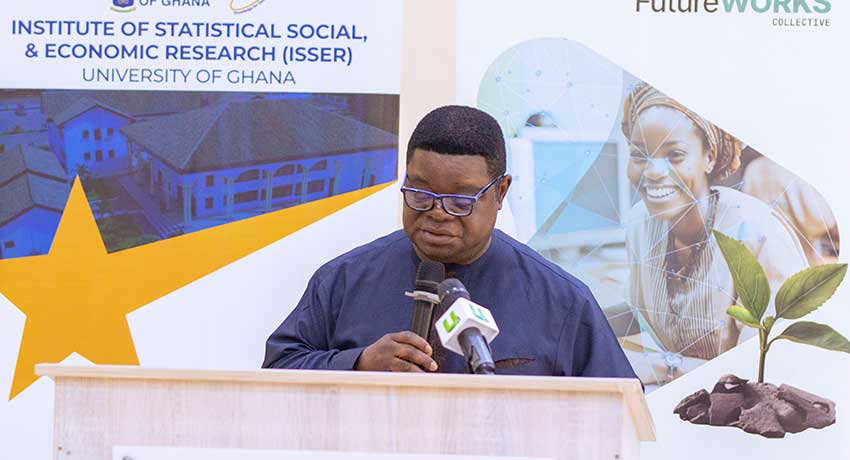
In his welcome remarks, Prof. Peter Quartey, Principal Investigator of the initiative, emphasised that technology alone does not transform employment.
“Tech does not transform employment by itself; it amplifies what already exists,” he noted.
He explained that the FoW WCA research examines digital transformation through five pathways: market access, skills development, inclusion, financial integration and the transformation of work. The engagement aimed to generate evidence on which platforms serve different groups, the opportunities they offer and the conditions needed to make digital employment more inclusive and meaningful.
Stakeholders discuss opportunities and barriers to youth inclusion
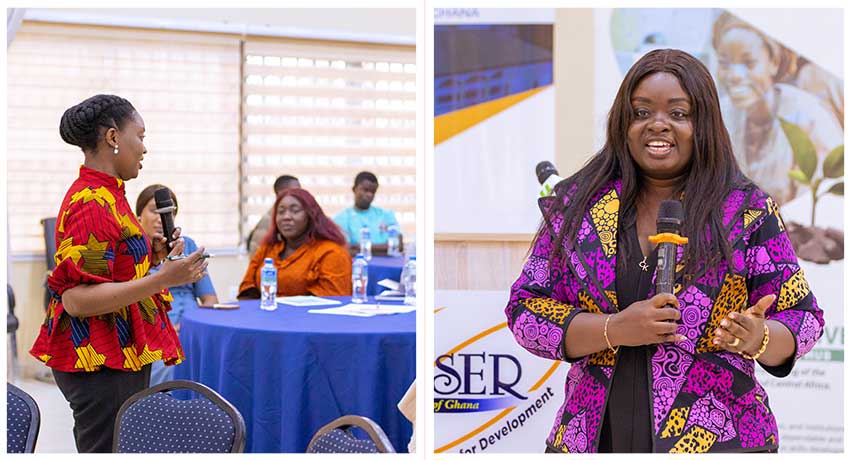
Moderated by Dr Nana Amma Asante-Poku, Research Fellow at ISSER, the stakeholder discussions explored the potential of digital platforms to expand youth participation in Ghana’s textile and apparel sector. Participants considered the platforms with the greatest potential, barriers to digital employment, and the skills, financing, infrastructure and institutional support needed to promote inclusion. They also raised concerns about online fraud, intellectual property protection and platform governance, highlighting the need for appropriate policy and regulatory measures.
Mr Mohammed Omar, National President of the Ghana National Association of Garment Makers, welcomed the opportunity for cross-sector dialogue.
“Too often, research is conducted without engaging the people on the ground. Bringing all of us from across the sector together to exchange experiences and ideas is truly remarkable,” he said.
The engagement also featured a session led by Prof. Agyapomaa Gyeke-Dako on “Co-Creating Impact: Stakeholder Engagement Strategy and Roadmap”, which explored practical ways to sustain stakeholder involvement and strengthen collaboration throughout the project. An interactive poll invited participants to identify priority actions for the initiative and indicate their interest in future engagement.
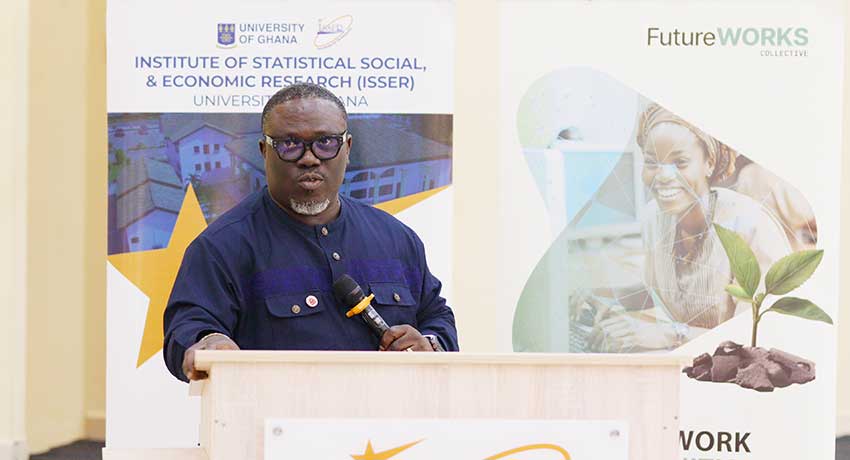
In his closing remarks, Prof. Festus Ebo Turkson, Co-Principal Investigator, underscored the growing importance of digital platforms to the industry’s future.
“One thing is clear today – that digital platforms are no longer an option. They are the very infrastructure that we need to drive the future of the T&A industry in Ghana,” he stated, adding that digital platforms could help transform traditional tailoring, sewing and local craftsmanship into a digitally enabled, export-oriented industry, opening up further opportunities for young people.
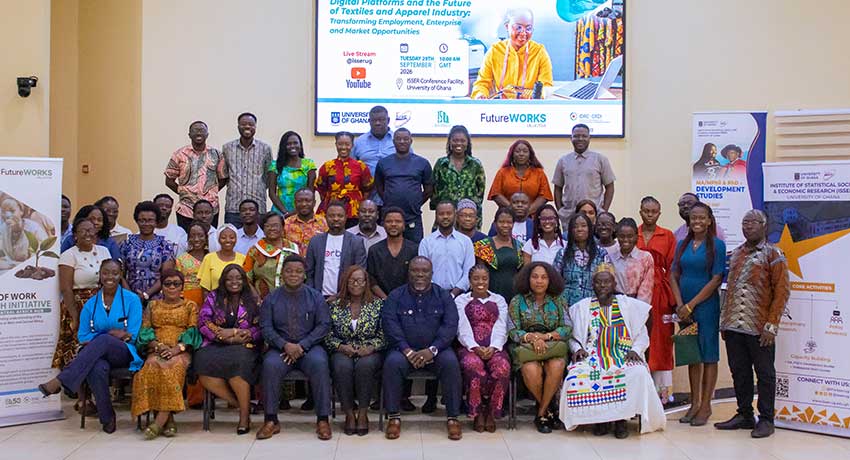
The stakeholder engagement meeting, “Digital Platforms in Transforming Youth Employment in the Textile and Apparel Sector,” was held on 29 September 2026, at the ISSER Conference Facility, University of Ghana.
Watch a recording of the event: Digital Platforms in Transforming Youth Employment – Textile and Apparel Sector
Access selected online media reports:
- Citi Newsroom: Lower data costs, cheaper loans key to apparel sector growth – Prof Quartey
- The Business & Financial Times: Deepen textiles and apparel support to drive youth jobs
Read more articles
- Log in to post comments