

Advancing Knowledge, Shaping Policy, Transforming Lives

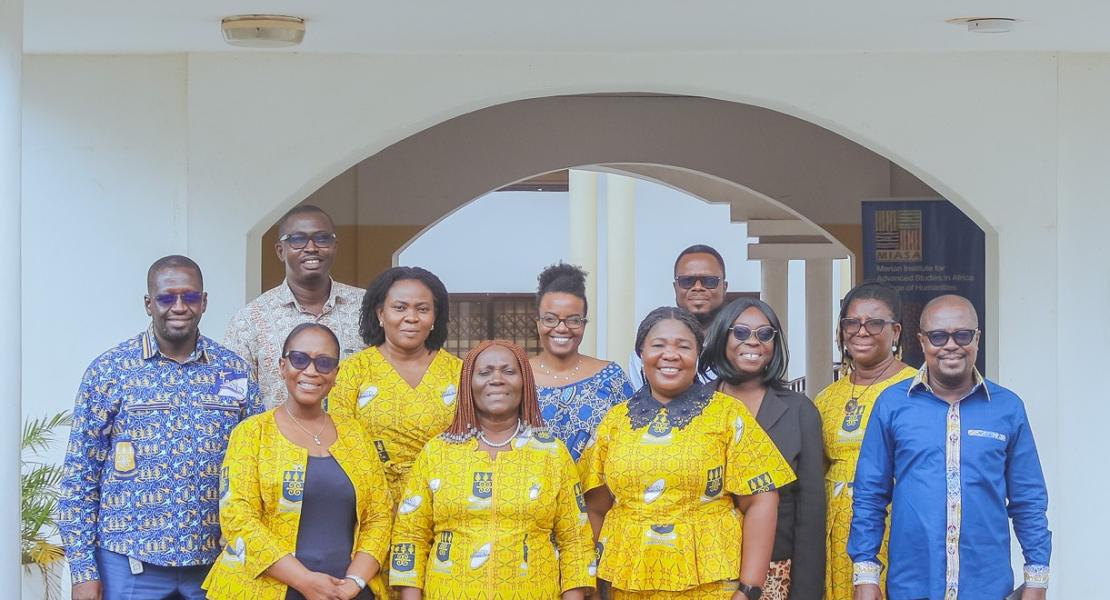

Prof. Simon Bawakyillenuo
Prof.

Prof. George Owusu
Prof. George Owusu is an urban geographer.

Rev. Prof. A. Y. Owusu
Adobea Yaa Owusu is a Professor of Medical Sociology and Public Health at the Institute of

Prof. Nana Akua Anyidoho

Dr. Elizabeth A. Asante
Dr E.A Asante is a Research Fellow at ISSER.


Dr. Martha Awo
Martha Awo's research focus includes trade policies and domestic markets, agriculture, food security and rural develo

Dr. Kofi Takyi Asante
Kofi Takyi Asante is a Senior Research Fellow.

Dr. John Kofie Anoku
John Kofie Anoku is a Research Fellow at the Institute of Statistical, Social and Economic Research (ISSER), Universi

Dr. Michael Kodom
Michael Kodom’s research interest focuses on assessing the interlinkages between digitalization and

Dr. Gertrude Dzifa Torvikey
Gertrude Dzifa Torvikey, holds PhD in Development Studies from the University of Ghana.
The Social Division (SD) of the Institute of Statistical, Social and Economic Research (ISSER), University of Ghana, is a dynamic hub for rigorous, multidisciplinary and policy-relevant research in the social sciences. The Division generates and mobilises knowledge to deepen understanding of Ghana’s and Africa’s socio-economic challenges and to contribute to inclusive and sustainable development through research, training, policy engagement and advocacy.
The Division currently comprises 12 researchers, including 2 Full Professors, 2 Associate Professors, 6 Senior Research Fellows and 2 Research Fellows. Its diverse team brings together complementary expertise and perspectives, strengthening the Division’s capacity to undertake high-quality research and engage effectively with policymakers, development partners, civil society, academia and other stakeholders.
Research and Thematic Areas
The Social Division undertakes interdisciplinary research across a broad range of development issues. Its core areas of expertise include social mobilisation and social protection; gender and development; urbanisation and national development; human capital development and socio-economic transformation; health and development; political economy and governance; policy analysis and policymaking; climate change and green development; and energy and the extractives sector.
Across these thematic areas, the Division examines cross-cutting development concerns including poverty, inequality, social inclusion and sustainability. Its research combines social science perspectives to generate evidence that can support effective policymaking, strengthen institutions and contribute to national and regional development agendas.
Flagship Research and Publications
The Social Division is the principal driver of ISSER’s Ghana Social Development Outlook (GSDO), the Institute’s biennial flagship publication on Ghana’s social development landscape. The GSDO provides comprehensive analysis extending beyond conventional social indicators to examine issues including health, education, gender, social protection, urbanisation and housing, energy and the environment, population, water and sanitation, work and employment, social relations, and land and security.
Through this and other research outputs, including peer-reviewed publications, policy briefs and policy dialogues, the Division contributes evidence and analysis to national development planning, policy debates and academic scholarship.
Collaboration, Collegiality and Impact
A strong culture of collegiality and collaboration underpins the Division’s work. Researchers collaborate on multidisciplinary projects, co-author publications and develop joint research proposals. The Division also operates a peer-review and learning culture, including a buddy review mechanism for strengthening GSDO chapters before external review. Collaboration extends across ISSER’s Economics and Statistics and Survey Divisions, as well as to colleagues across the University of Ghana and national and international institutions.
The Division’s research is disseminated through scholarly publications, policy briefs, policy dialogues and other knowledge-sharing platforms. Its work informs national development strategies, policy and institutional reforms, teaching and learning, and debates on social protection, education, energy, environment, health, governance, housing and other critical development issues. Through rigorous research, active engagement and knowledge dissemination, the Social Division continues to contribute to evidence-informed policy and sustainable development in Ghana and beyond.