

The Institute of Statistical, Social and Economic Research (ISSER), through its African Network of Agricultural Policy Research Institutes (ANAPRI) initiative, convened a policy dialogue to examine how Ghana can strengthen agricultural commodities trade, cross-border governance, and financing. These areas are critical to unlocking the country’s competitiveness under regional frameworks such as ECOWAS and the African Continental Free Trade Area (AfCFTA).
The discussions explored the inefficiencies in Ghana’s agri-trade system, and outlined evidence-based recommendations, including the need to scale up private investment in agriculture and improve coordination across trade, security, and regulatory institutions to reduce bottlenecks and enhance policy coherence.

“Participants must move beyond diagnosis and focus on realistic and implementable solutions that can improve Ghana’s agricultural trade systems,” said Prof. Robert Darko Osei, Director of ISSER, in his opening remarks.
The dialogue took place against the backdrop of growing recognition that structural and institutional constraints, including regulatory fragmentation, trade facilitation challenges and limited access to finance, continue to limit Ghana’s ability to fully benefit from regional trade integration. Participants included policymakers, researchers, private sector actors, and regional institutions.
Coordinated action needed to strengthen agricultural trade systems
The dialogue was structured around key thematic areas: agricultural trade policy architecture, trade facilitation and cross-border governance, agricultural trade financing and regional alignment. Discussions explored issues such as import and export regulations, customs procedures, informal trade routes, and access to finance, with participants emphasising the need for more coherent and coordinated policy responses.
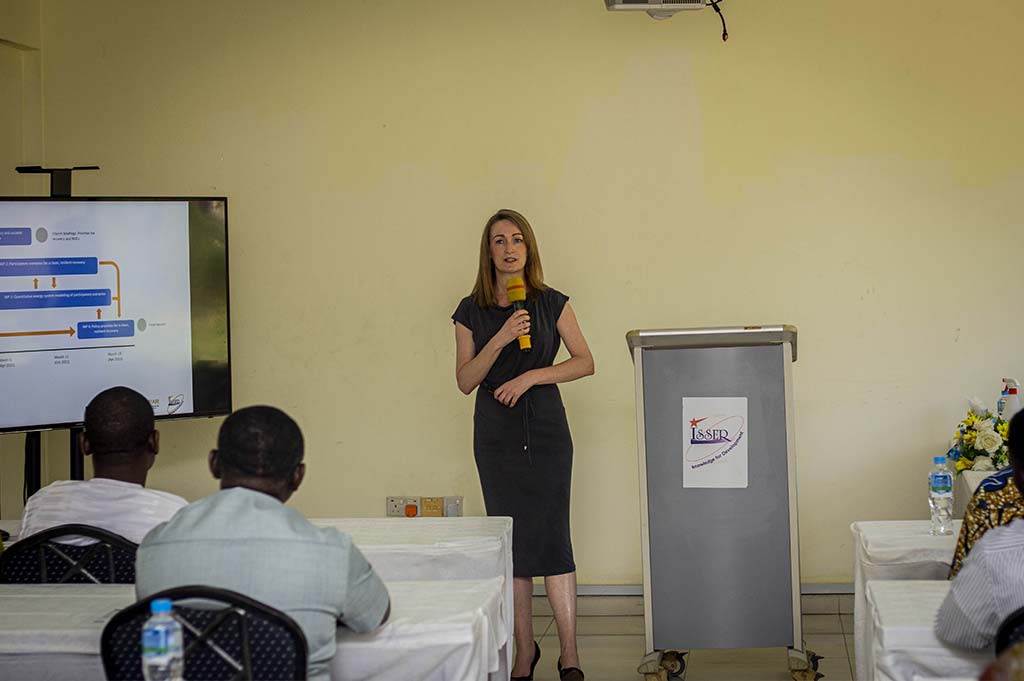
Providing the analytical foundation, Prof. Fred Dzanku of ISSER presented an overview of Ghana’s agricultural commodities and cross-border trade landscape. He highlighted structural and policy bottlenecks within the country’s import and export systems that constrain its ability to fully leverage regional market opportunities.
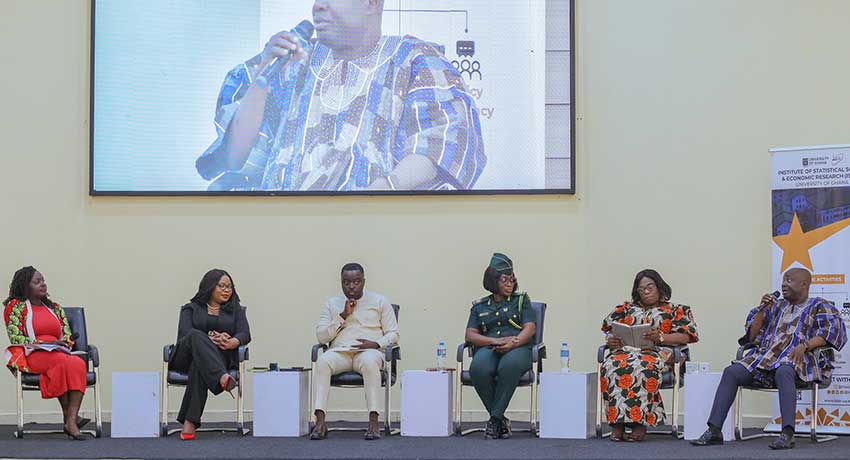
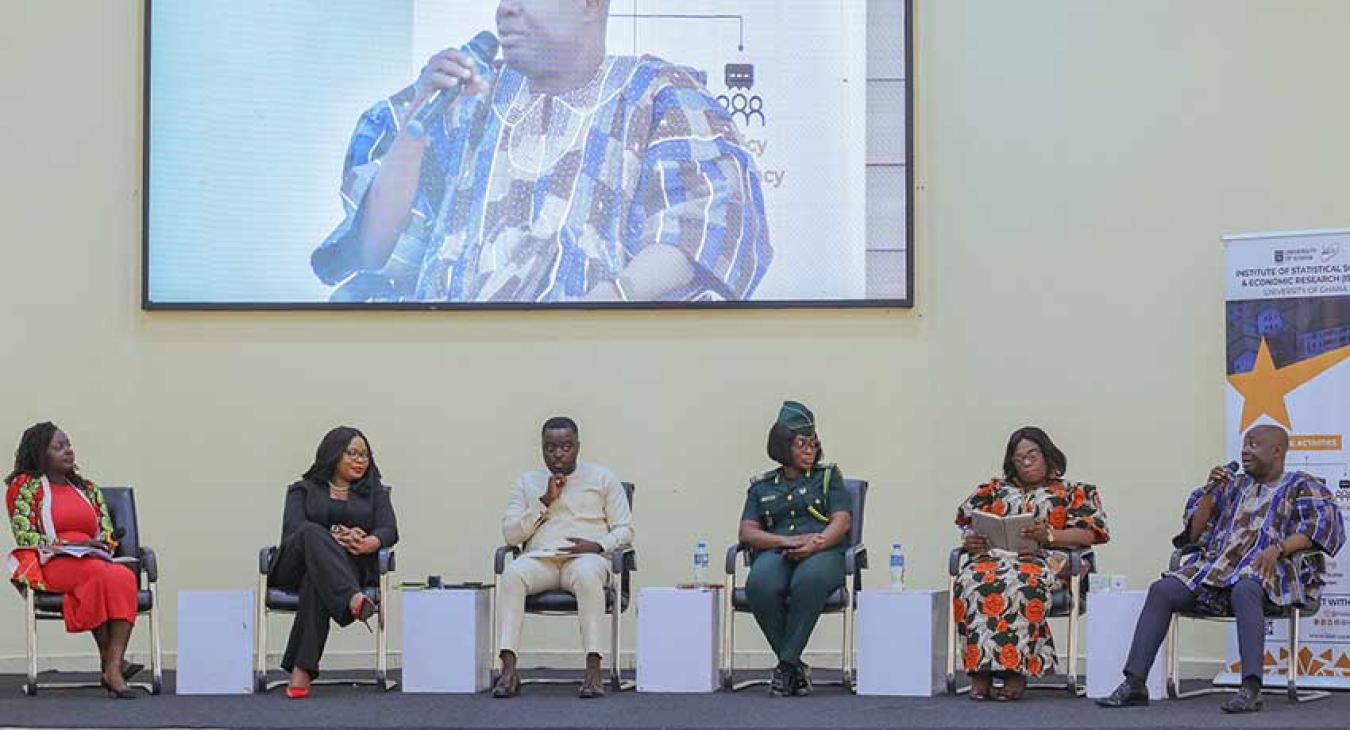
Dr. Esther Aba Eshun moderated a high-level panel discussion featuring Mr. Kwame Oppong-Ntim (Ministry of Trade, Agribusiness and Industry), Prof. Irene Susan Egyir (University of Ghana), ACI Vera Obeng Konadu (Ghana Immigration Service), Mr. Emmanuel Amprofi (Federation of Associations of Ghanaian Exporters), and Ms. Benedicta Lasi (Executive Chair, African Trade Chamber). Panellists reflected on long-standing inefficiencies in the agri-trade sector and examined how these have evolved over time.

Mr. Oppong-Ntim acknowledged structural incoherence within Ghana's regulatory landscape and indicated that a new integrated agribusiness policy is under development, with clear provisions for market access by women, youth, and persons with disability. He underscored the Ministry's commitment to data systems as a prerequisite for evidence-based policymaking.
Prof. Egyir called for a shift in how agriculture is perceived, urging Ghana’s wealthy to invest in farming and agri-food businesses. Drawing on her own experience as an investor, she emphasised that agriculture is a viable and profitable sector, provided the right policy environment is in place.

ACI Obeng Konadu outlined recommendations to reduce the vulnerability of cross-border traders and curb smuggling along unapproved routes, noting that improved coordination between the Ghana Immigration Service and the Ghana Revenue Authority (Customs Division) would enhance both security and the tracking of goods.
Mr. Amprofi described the trade finance landscape as a crisis of availability, accessibility, and affordability. He cited formal interest rates of 20–35 percent and informal lending rates of up to 15 percent per month in markets such as Madina. He called for innovative, data-driven financing mechanisms, including the use of mobile money transaction histories as alternative credit signals, and stressed the importance of reliable data systems for trade planning and forecasting.

Ms. Lasi stressed the need for stronger coordination across security, trade and legal systems at both national and regional levels. She noted that, as host of the AfCFTA Secretariat, Ghana has a responsibility to address domestic inefficiencies and demonstrate leadership in advancing regional integration.
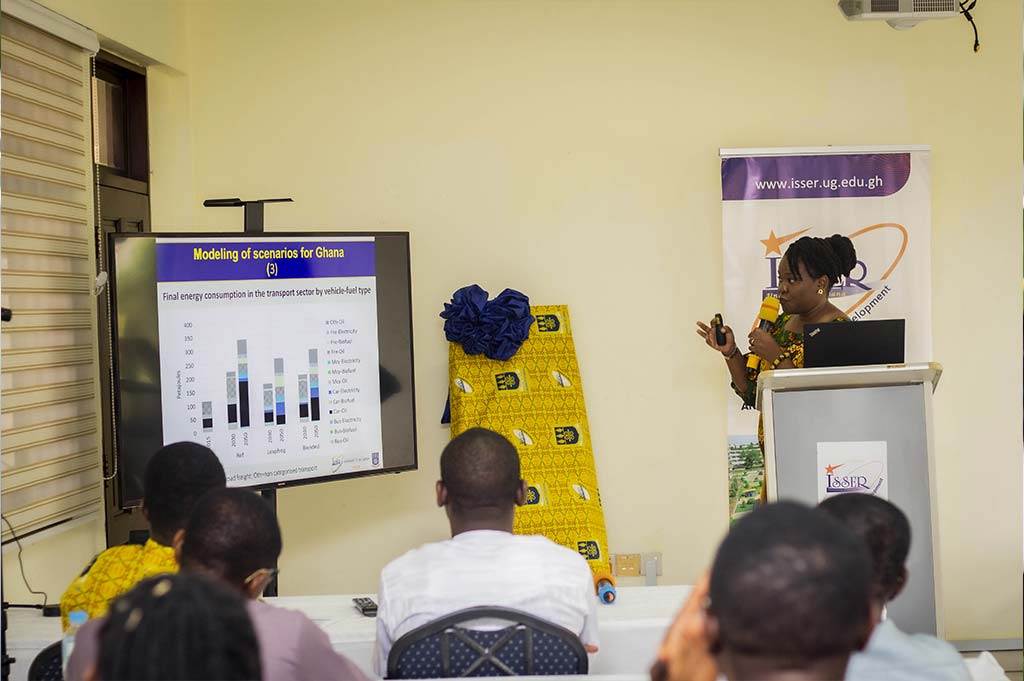
Participants also engaged in thematic group discussions, enabling deeper exploration of policy, financing, and governance challenges. In plenary, two clear priorities emerged: increasing private sector investment in agriculture and strengthening institutional coordination to improve efficiency and policy outcomes.
Held on 15 April 2026 at the ISSER Conference Facility, the Ghana Dialogue on Agricultural Commodities Trade, Cross-Border Trade Governance and Financing helped to align stakeholders around actionable, evidence-informed solutions -- strengthening collaboration and accelerating efforts to address agricultural trade challenges in Ghana and across the region.
Read more articles
- Log in to post comments