

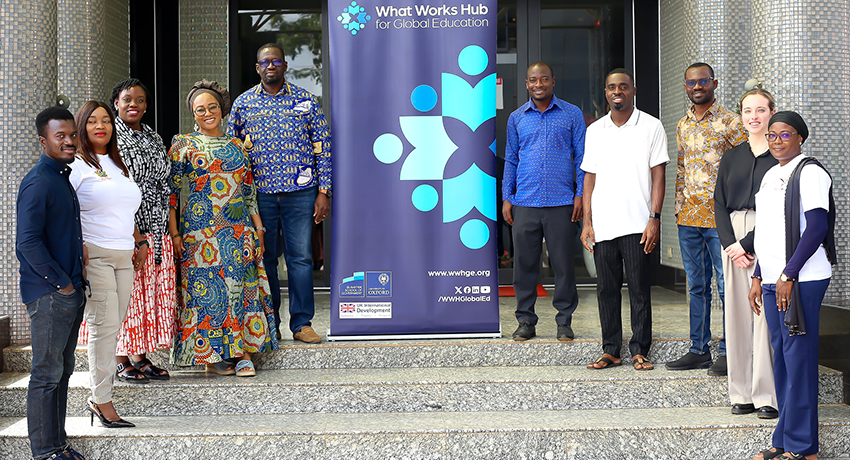
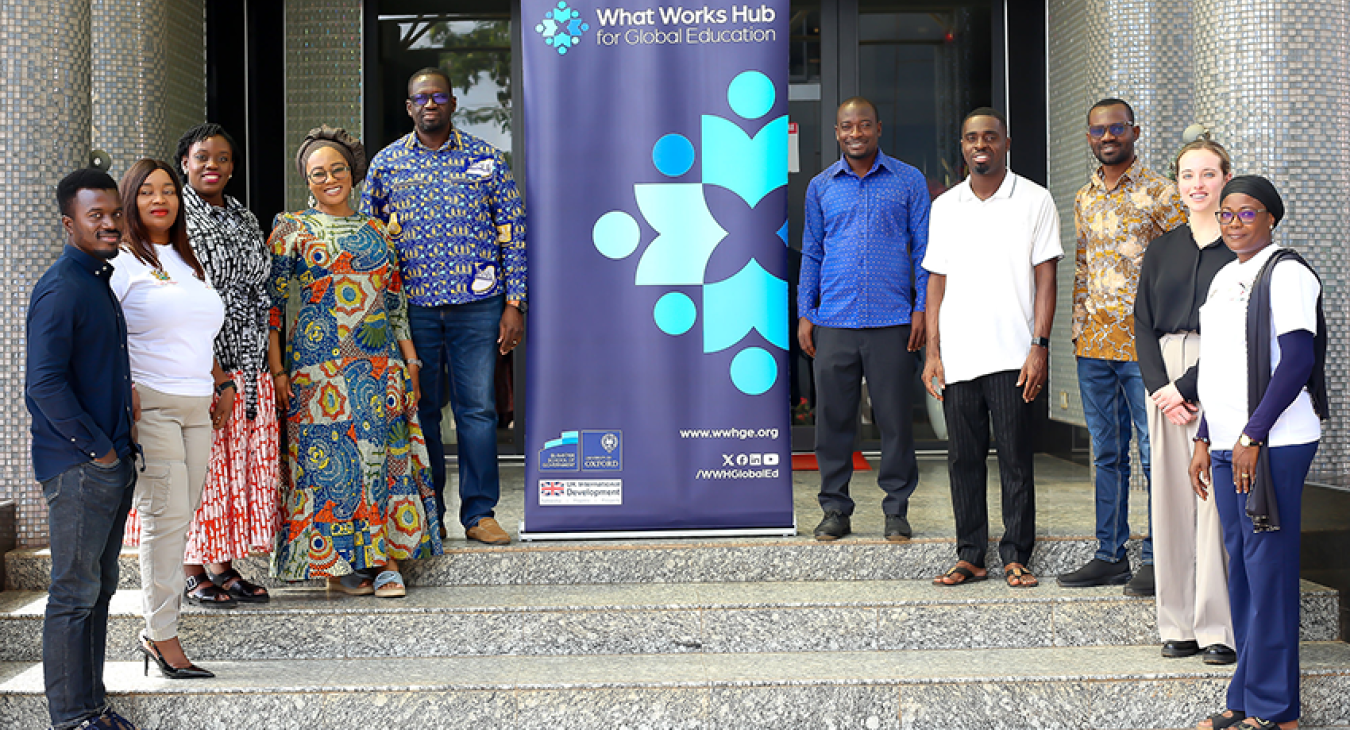
The Institute of Statistical, Social and Economic Research (ISSER), University of Ghana, is leading a major national education study in partnership with the University of Oxford, marking the latest phase of a long-standing research collaboration between the two institutions. As Oxford’s implementation partner in Ghana since 2022, ISSER is conducting the endline evaluation of the What Works Hub for Global Education (WWHGE) Outcomes Fund study, covering 820 public basic schools in 21 districts in four regions of Ghana: Northern, North East, Savannah, and Oti.
The study evaluates the Ghana Education Outcomes Project (GEOP), a flagship initiative of the Government of Ghana, aimed at ensuring that all children are in school and learning. GEOP works with non-state service providers to improve foundational literacy and numeracy in the country’s lowest-performing schools through a results-based financing model that rewards improvements in learning outcomes rather than programme inputs.
The three-month endline evaluation, running from January to March 2026, is led by Oxford University through WWHGE, with ISSER responsible for field implementation, quality assurance, data management, and ethical research oversight.
Dr. Jennifer Opare-Kumi of Oxford University said the continued partnership with ISSER is grounded in the positive experience from their very first joint project.
“The quality of the data, the quality of implementation, and professionalism. Everything was just above our expectations. So, when it came to working on this research study, we were very keen to maintain the partnership, to keep working together, and we have not been disappointed. It has been an excellent experience, and we constantly recommend working with ISSER, especially for government and multi-partner projects,” she said.
Trains 162 enumerators for fieldwork
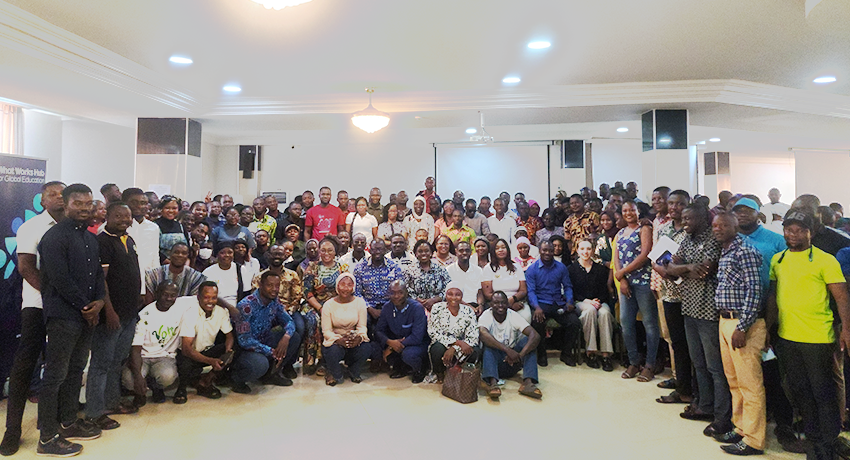
As part of preparations for the fieldwork, ISSER trained 162 enumerators during a seven-day intensive programme in Tamale from January 11 to 17, 2026. The training focused on research ethics, data quality standards, survey protocols, and the use of Computer Assisted Personal Interviewing (CAPI) tools for data collection.
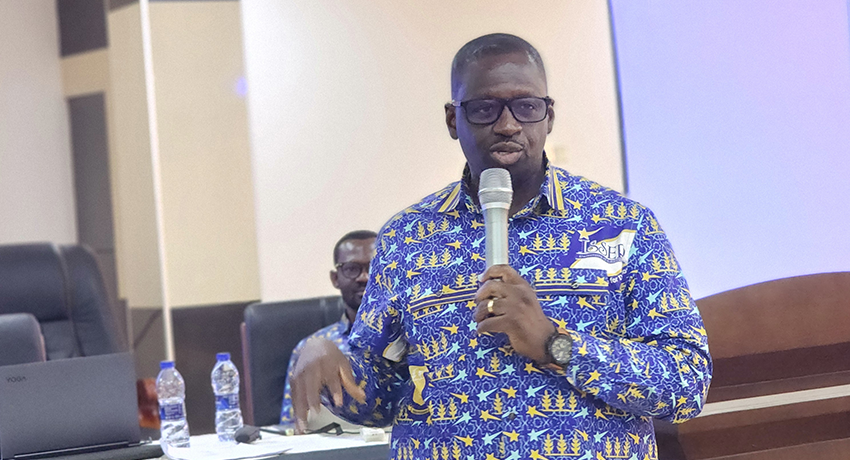
“ISSER’s leadership of the WWHGE endline study demonstrates our strong capacity for large-scale impact evaluation and our ability to deliver rigorous, policy-relevant evidence in complex operational contexts,” said Principal Investigator at ISSER, Prof. Simon Bawakyillenuo.
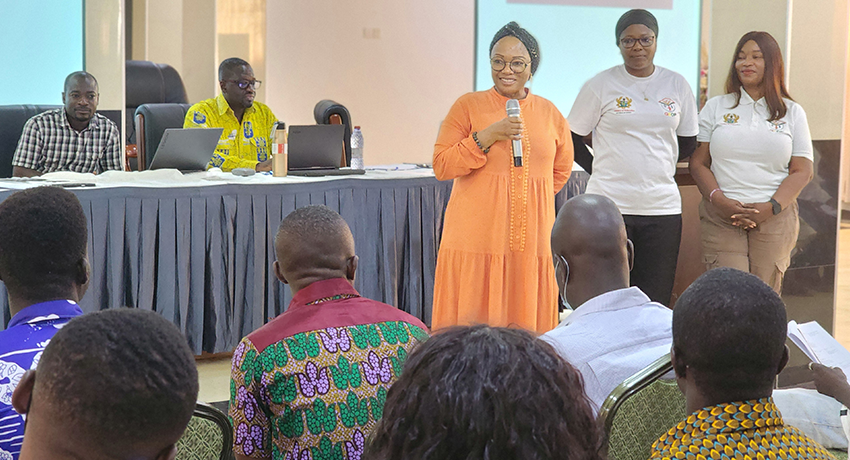
During the training, in a show of support, the Coordinator of the Ghana Education Outcomes Project, Hajia Nana Fatima High, visited the field teams. She emphasised that GEOP is currently the largest education outcomes project in the country, urged enumerators to exercise patience with schoolchildren, and stressed that the survey must be conducted professionally and ethically, with zero incidents in the field.
The programme was facilitated by ISSER’s technical team, including Dr. Richard Nkrumah, Dr. Innocent Agbelie, Mr. Benjamin Sekum, and data analyst Mr. Ralph Sam, and concluded with a field pre-test in selected schools in Tamale and Karaga, allowing enumerators to apply their training in real classroom settings.
The endline study will generate evidence on student learning outcomes, classroom environments, and teacher practices, providing a basis for a package of proven, cost-effective interventions for the Ministry of Education.
This evaluation assignment reinforces ISSER’s role as a leading partner in education research and global impact evaluation, while contributing to understanding what truly works to improve learning outcomes in Ghana’s low-resource settings.
- Log in to post comments