

"You can avoid becoming a caregiver, but you can't avoid being a care receiver if you live long enough."
This profound statement resonated throughout a stakeholder workshop that brought together diverse actors to discuss new research findings around the long-term care system for older adults in Ghana. Organised as part of the second phase of the Developing Ghana's Care Economy: Case and Potential project, the workshop provided an inclusive platform for stakeholders to reflect on new research findings, identify key challenges, and co-create culturally grounded solutions towards developing a sustainable sector.
Participants acknowledged this was a universal, often overlooked topic, with far-reaching implications for the wellbeing of older adults, caregivers, families, and Ghanaian society, and commended the research team for addressing the subject.
 PhD students Mr. Daniel Offei (left) and Mr. Stephen Tetteh Nortey present findings.
The project team presented the project overview and key findings. Among other findings, they highlighted that family caregivers, predominantly women, face severe financial, physical, and emotional burdens, with reduced participation in the labour market. Meanwhile, the emerging private care sector remains fragile, characterised by weak regulation, high staff turnover, and limited affordability, particularly for low-income households. These insights lay the foundation for collaborative discussions involving all participants.
 Active stakeholder engagement during group discussions highlights the shared commitment to improving care for older adults and protecting the wellbeing of caregivers.
Working in groups, participants examined three key problem areas: the lack of respite for caregivers, the healthcare needs of older persons, and the financing of long-term care systems. Drawing on their professional and lived experiences, participants proposed practical, culturally grounded solutions. These co-created solutions will inform the next phase of the project, which involves case studies designed to test and refine interventions in real-life settings.
 Members of one of the five breakout groups discussing their co-created solutions.
 One of the breakout groups presents their co-created solutions to addressing challenges in Ghana’s long-term care system.
The interest and engagement of participants throughout the half-day workshop underscored not only the effectiveness of the event's participatory format, but also the importance attached to dignifying care for older adults and safeguarding the wellbeing of caregivers.
As Co-Principal Investigator Prof. Charles Godfred Ackah noted, "A better and more professional long-term care service provision in Ghana will not only improve the quality of life for older persons and caregivers, but will also generate meaningful employment opportunities, especially for women."
 Co-Principal Investigator Prof. Charles Godfred Ackah speaks to the media on developing a professional long-term care sector in Ghana.
The workshop was held on 13 February at Accra City Hotel in Accra, and brought together representatives from government agencies, academia, NGOs, pensioners' associations and individual and commercial care providers. Key institutions included the National Pensioners Association, Health Facility Regulatory Agency (HeFRA), the University of Ghana's Centre for Aging Studies, the Department of Community Development (Ministry of Local Government, Chieftaincy and Religious Affairs), the Ministry of Education, as well as individual and commercial care service providers. It builds on a similar stakeholder workshop in 2024, demonstrating the project's commitment to sustained engagement and collaborative knowledge generation.
The Ghana's Care Economy: Case and Potential project is funded by the Ministry of Foreign Affairs of Denmark through the Danida Fellowship Centre. Other members of the project team include Co-Principal Investigators Prof. Justice Nonvignon (University of Ghana), Prof. Ulrika Enemark, (Aarhus University, Denmark) and Prof. Isabella Aboderin (University of Bristol). PhD students on the project are Mr. Daniel Offei, Mrs. Golda Anambane, Ms. Adjeiwa Affram and Mr. Stephen Tetteh Nortey. The Research Assistant on the project is Ms. Ida Felstermann-Rasmussen from Aarhus University. Project partners include the University of Ghana, Aarhus University, and the African Population and Health Research Centre (APHRC). For more information about the project, visit https://ph.au.dk/gce.
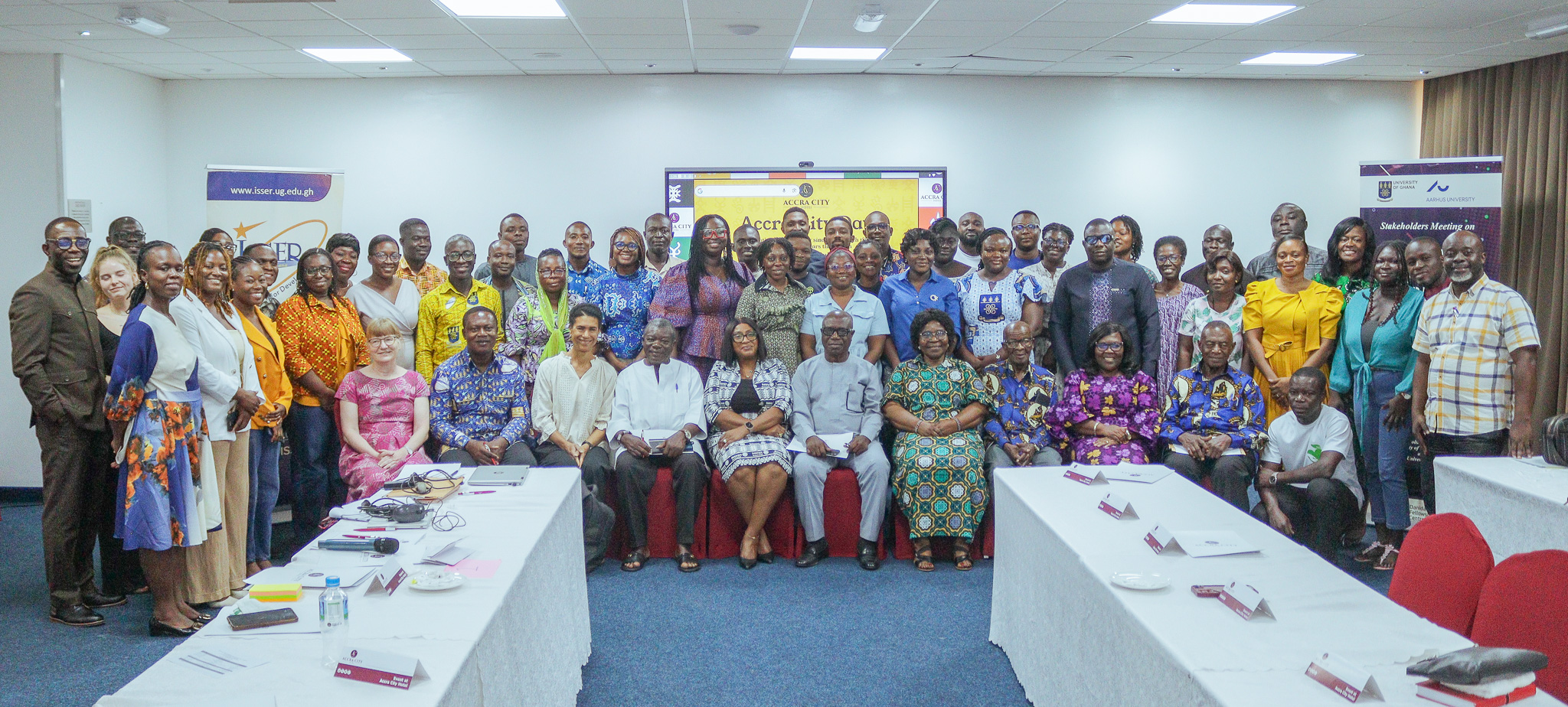
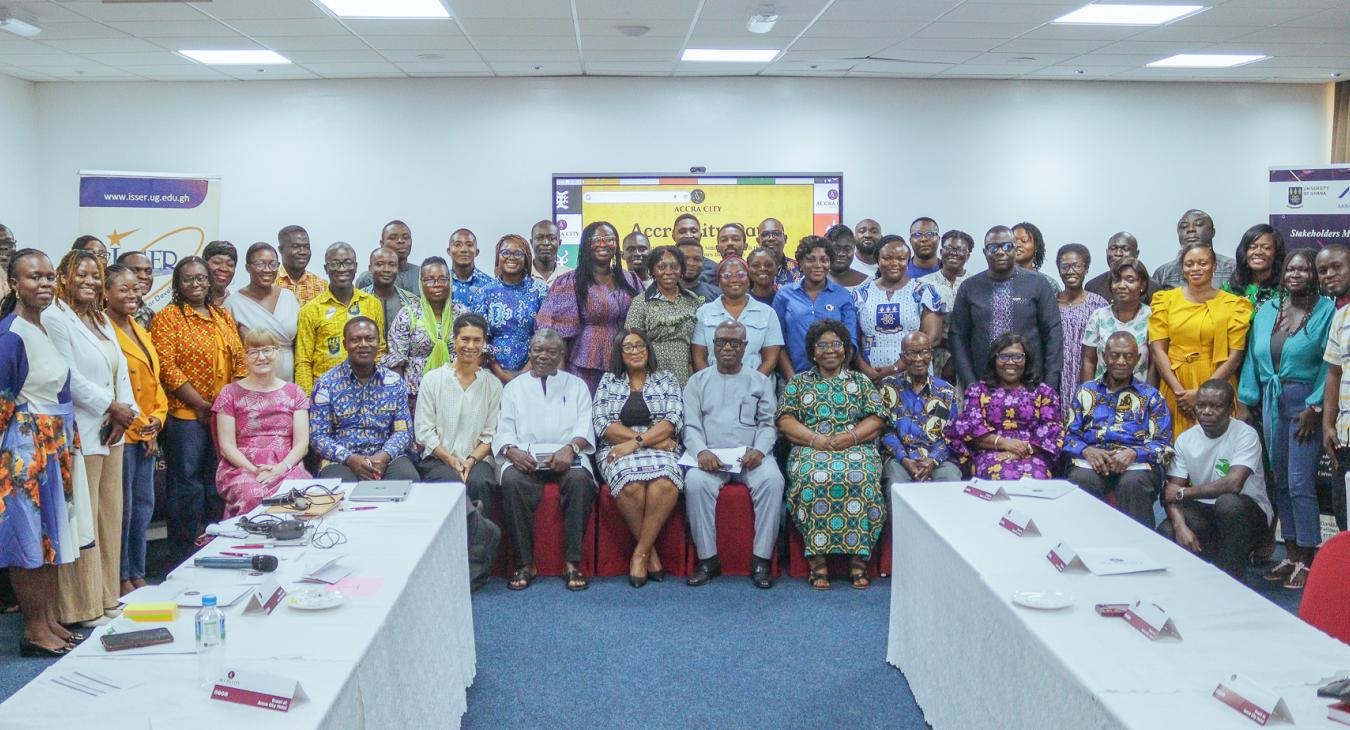
 Members of the Ghana’s Care Economy: Case and Potential project team.
Selected online media reports on the event can be accessed below:
Ghana’s care economy holds the key to mass employment- ISSER – GNA. Read more
Ghana must invest in elderly care – Prof. Ackah -- Ghanaian Times. Read more
- Log in to post comments