


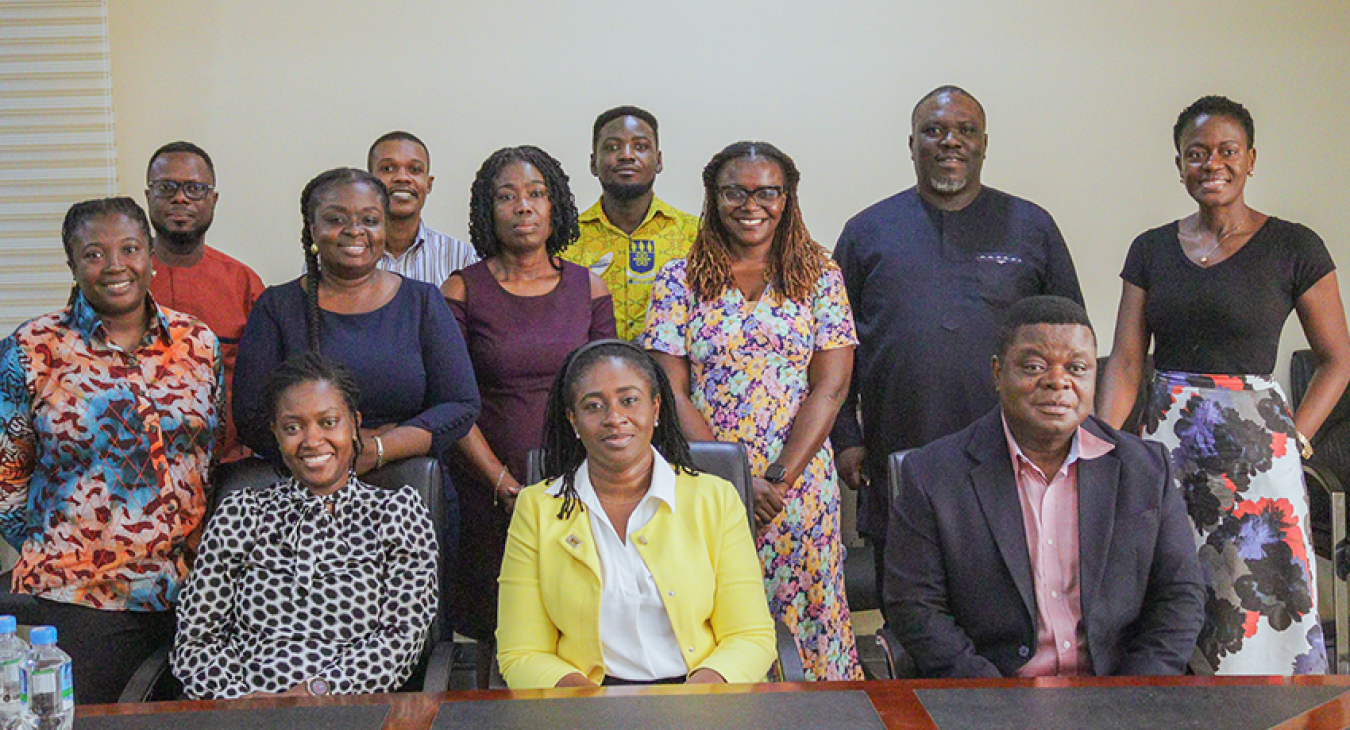
The West and Central Africa (WCA) Hub of the Future of Work (FoW) research initiative convened a catch-up meeting with seven grantees from Ghana, Nigeria, and Senegal to strengthen research collaboration, communication capacity, and the overall impact of the Hub’s research portfolio. The session provided an opportunity to review the progress of ongoing projects, enhance coordination, and reinforce shared learning across research teams.
Prof. Peter Quartey, Principal Investigator of the FoW WCA Hub, underscored the significance of the meeting as a platform for deepening collaboration, peer learning, and knowledge exchange. He noted that structured engagements of this nature enable grantees to share implementation experiences, learn from one another, and enhance the overall quality and coherence of the Hub’s research portfolio.
“The strength of this initiative lies in our commitment to continuous engagement, shared learning, and the collective contribution of our research teams to generating evidence that can shape practical policy responses across the region,” he said.
Strengthening research collaboration and capacity
Grantees provided updates on their respective projects, offering insights into implementation progress and emerging findings. The projects collectively address a rich spectrum of interconnected themes — from digital technologies and artificial intelligence to climate pressures and labour market dynamics — with the shared goal of reshaping livelihoods and employment across the region. Beyond progress reporting, the meeting provided a valuable platform for constructive feedback, cross-learning and the strengthening of collaborative linkages among research teams.
Project Director, Adadzewa Otoo, also presented highlights from the FutureWORKS Collective Midpoint Research Workshop held in January 2026. She shared key insights and outlined next steps relevant to grantees, including efforts to deepen policy and industry relevance to support the uptake of research outcomes, and opportunities to contribute to regional and global research products emerging from the initiative. Her presentation reinforced the importance of aligning ongoing research with broader strategic objectives to maximise impact and visibility.

Reinforcing communication capacity
The meeting also featured a communications session aimed at strengthening grantees’ capacity to disseminate their research effectively. Delivered by Communications Manager Vicentia Quartey, the session outlined key responsibilities within the collaborative communication process and established clear expectations around the documentation and promotion of project activities. Particular emphasis was placed on the importance of proactively sharing research progress to deepen public engagement, broaden research uptake, and amplify policy influence at both national and regional levels.
In his closing remarks, Prof. Quartey thanked all grantees for their updates and encouraged them to sustain momentum in implementing their projects. He reaffirmed the Hub’s confidence in the collective contribution of the research portfolio to generating actionable evidence and shaping an inclusive and resilient future of work in West and Central Africa.
The hybrid meeting was held on 10 February at ISSER, with implementing partner ISRA BAME and grantees participating virtually.
- Log in to post comments