

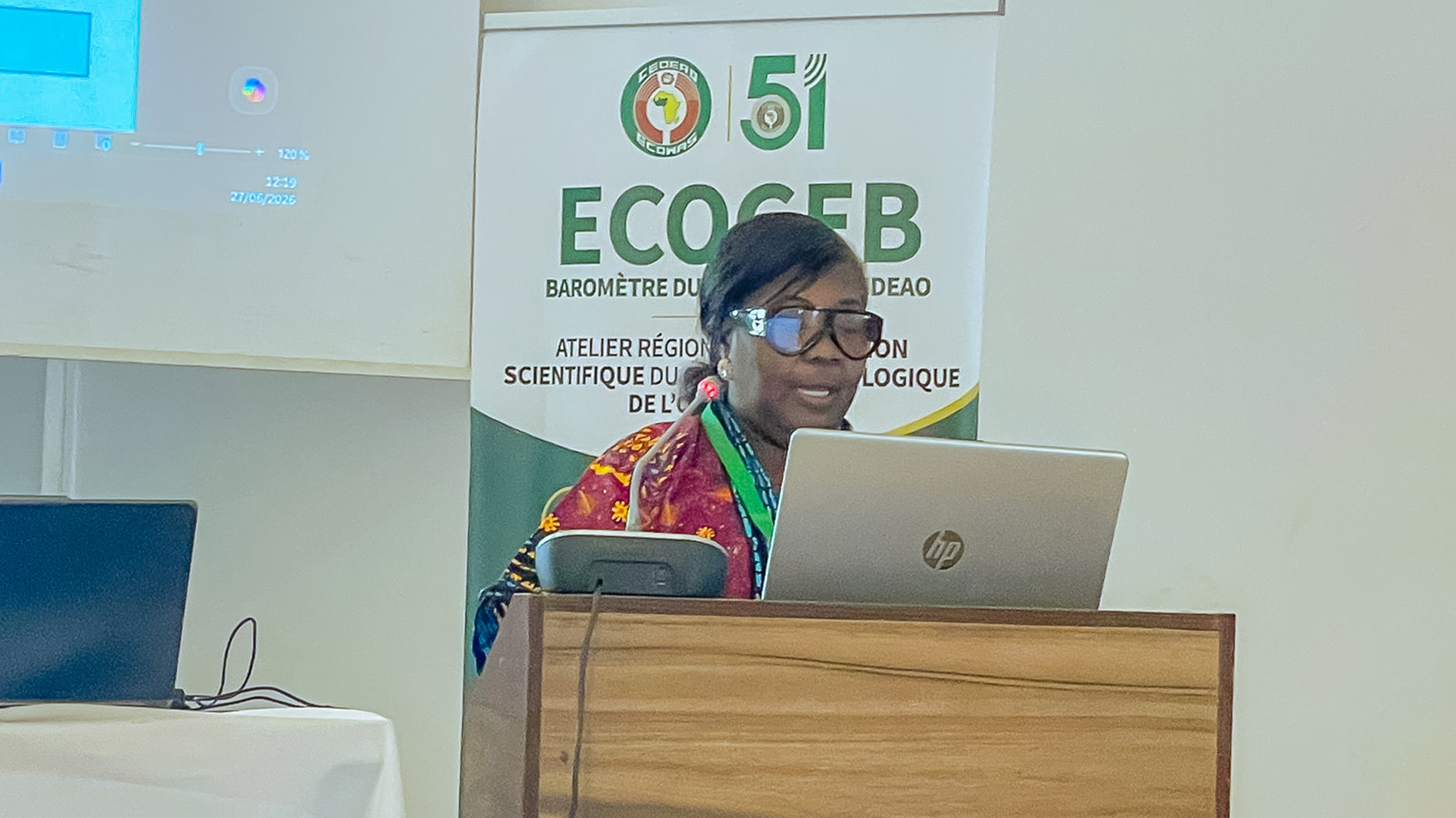
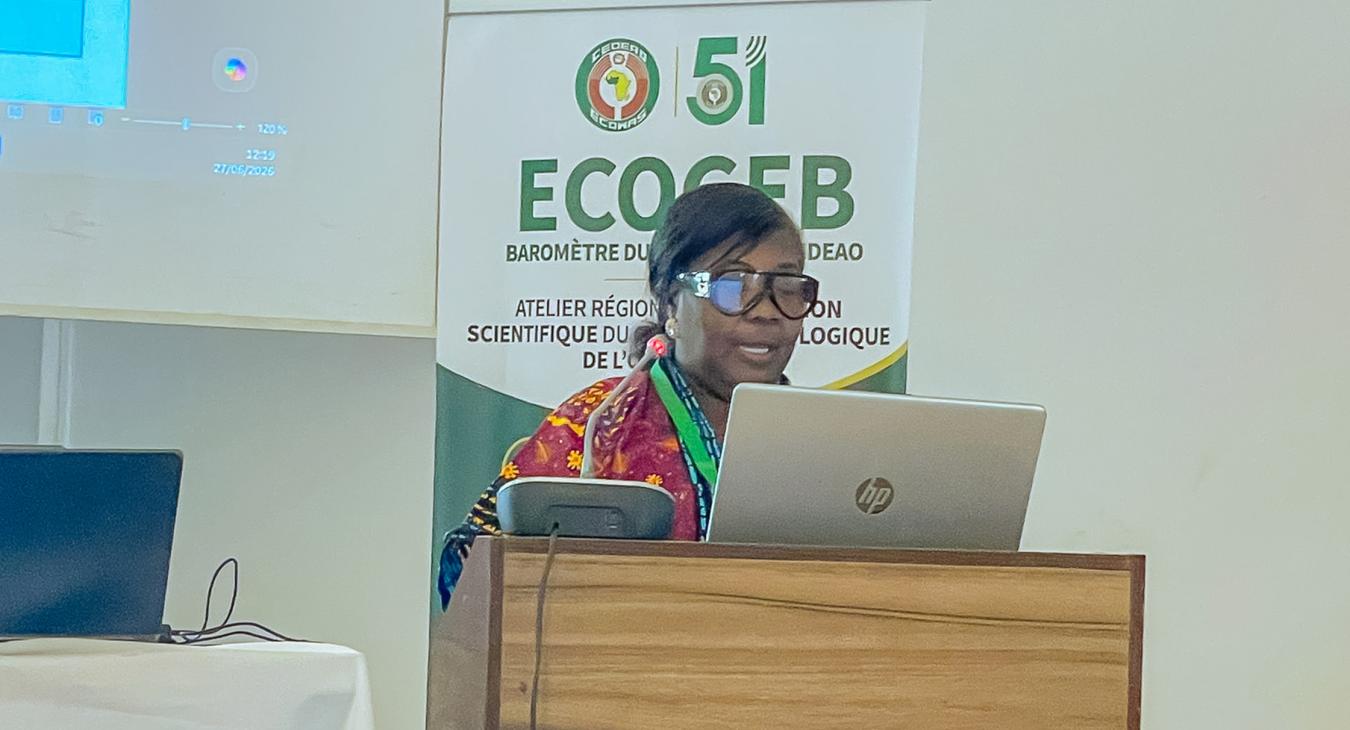
Dr Cynthia Addoquaye Tagoe presents her group's report during the workshop, highlighting key observations on the ECOGEB methodology and its readiness for adoption.
Senior Research Fellow at the Institute of Statistical, Social and Economic Research (ISSER), Dr Cynthia Addoquaye Tagoe, represented the institute at a regional workshop for the scientific validation of the ECOWAS Gender Barometer (ECOGEB) Methodological Guide.
Dr Addoquaye Tagoe actively contributed to the technical discussions throughout the workshop, participating in deliberations on the appropriateness and robustness of the ECOGEB methodology and the readiness of the tool for adoption. She also presented her group’s report, highlighting key observations from the discussions.
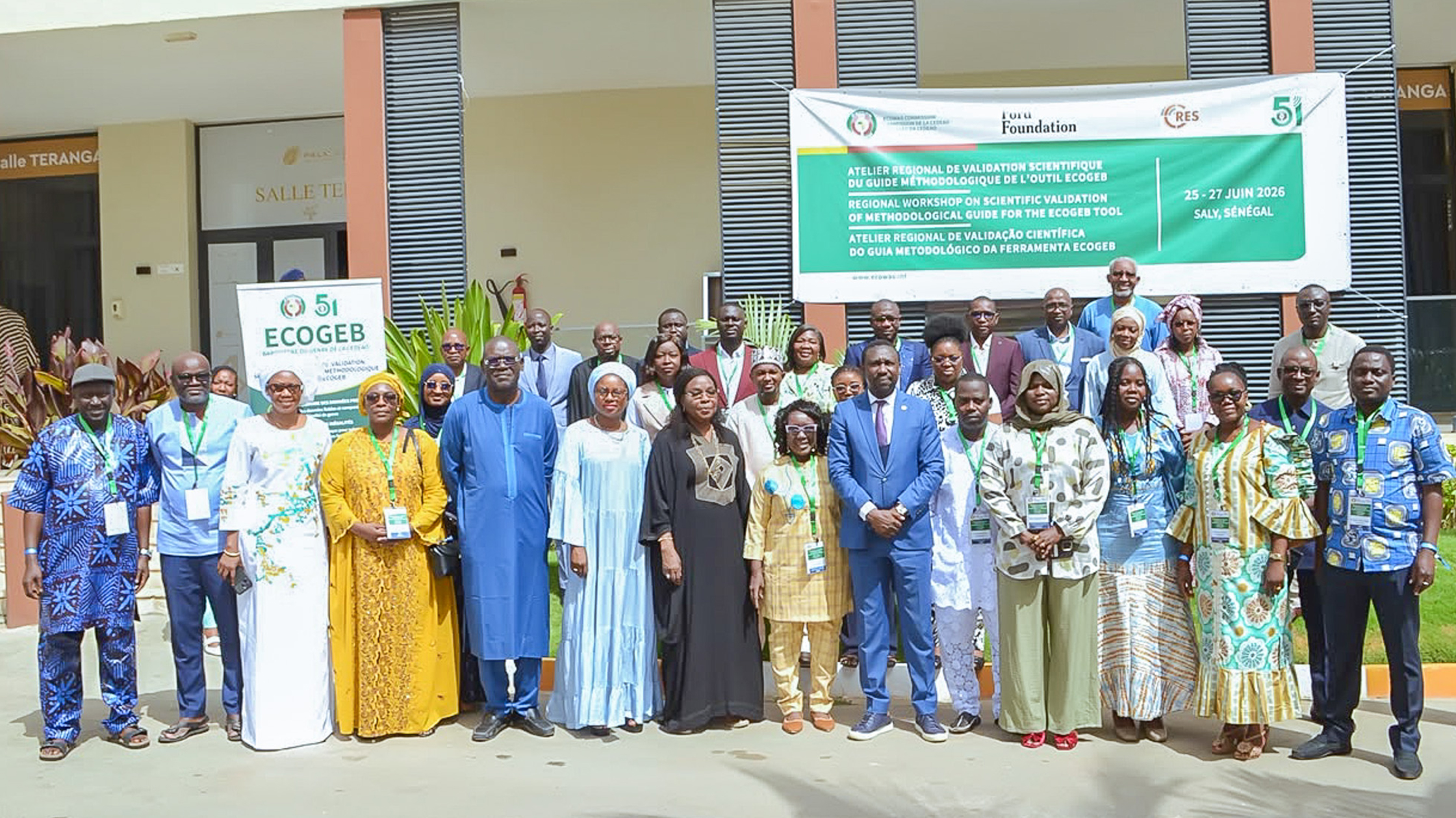
The workshop was organised by the Department of Human Development and Social Affairs of the ECOWAS Commission, through the ECOWAS Centre for Gender Development, in collaboration with the Consortium for Economic and Social Research (CRES). The event drew about 40 participants from across the West African sub-region, including representatives of UN Women, the ECOWAS Commission, national statistics institutions, research institutes and civil society organisations from member states.
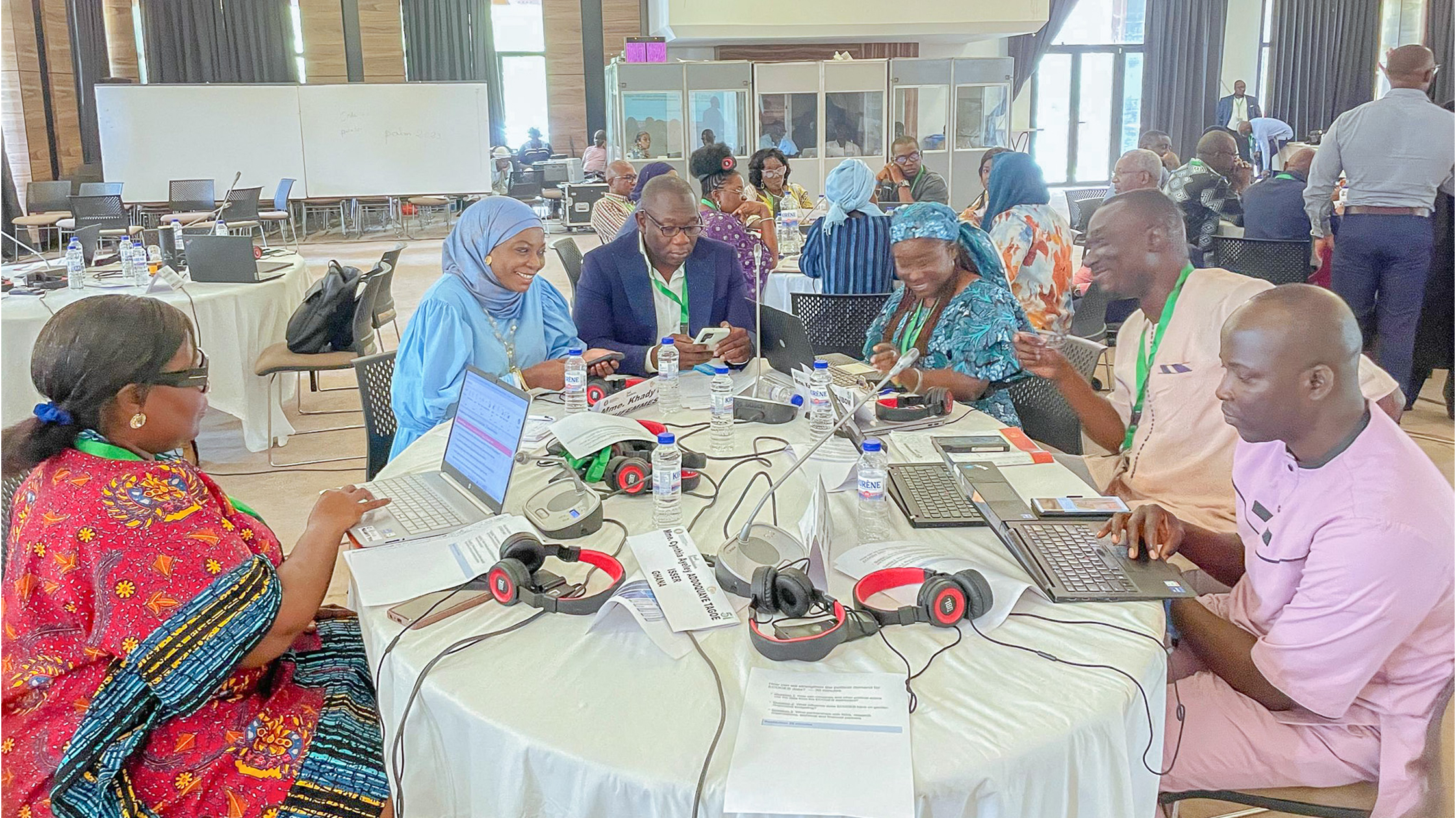
Participants were introduced to the ECOGEB framework and the datasets underpinning the Gender Equality Index. The Index monitors gender inequalities across the region and generates evidence-based, comparable data to support the planning and monitoring of national and regional interventions on gender equality, and to inform public policy more broadly.
Held from 25th to 27th June 2026 in Saly Portudal, Senegal, with funding support from the Ford Foundation, the workshop represents the first in a series of engagements towards the validation and formal adoption of the ECOGEB Tool by relevant bodies across the ECOWAS region.
Dr Addoquaye Tagoe’s participation highlights the contribution of ISSER’s Social Division, one of the institute’s three divisions, in advancing research that addresses critical social development challenges. Through its thematic focus areas including gender, education, health, governance and social policy, the Division generates evidence to inform policy, promote inclusive development and support improved social outcomes in Ghana and beyond.
- Log in to post comments