

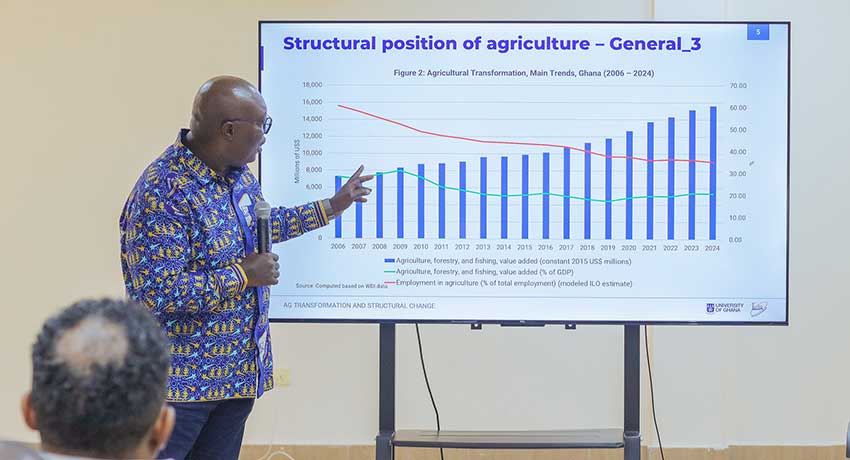
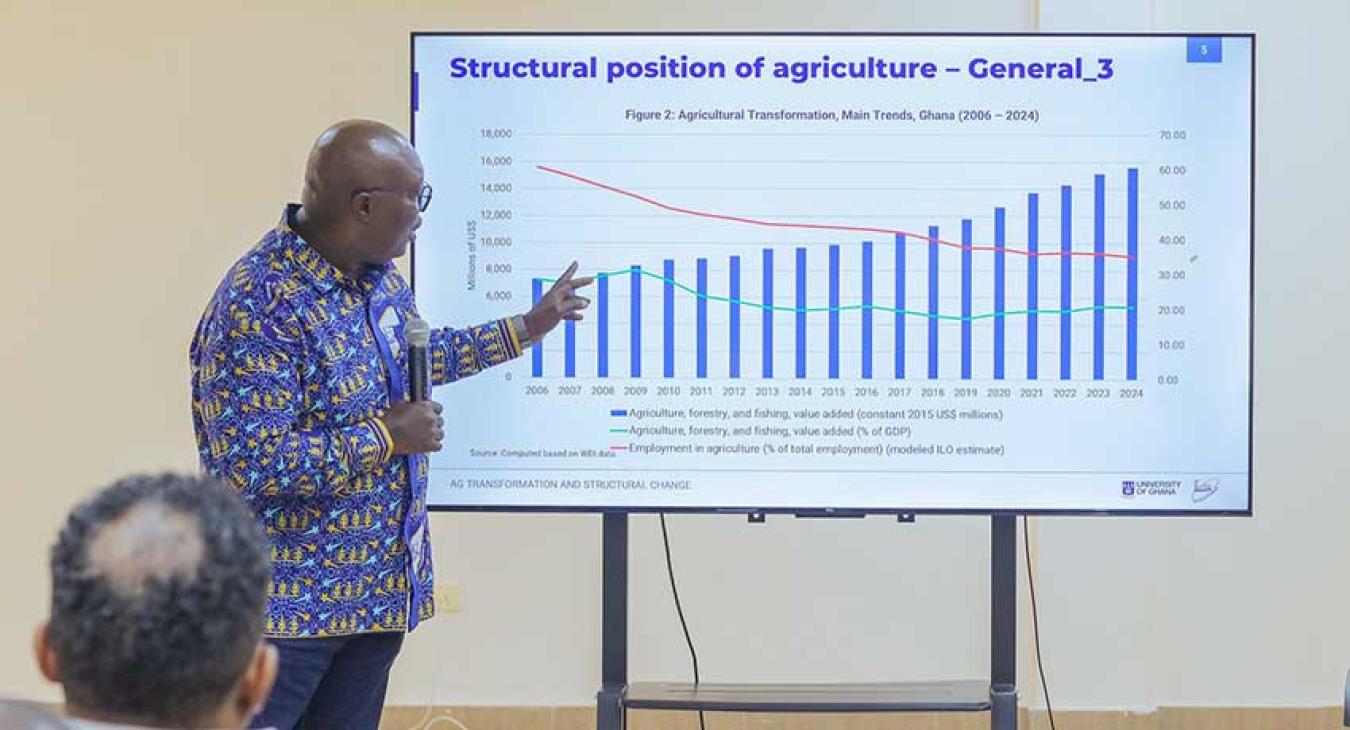
Prof. Robert Darko Osei, Director of ISSER and member of SPIA, delivers the keynote address on Ghana’s agricultural trajectory and priorities for transformation.
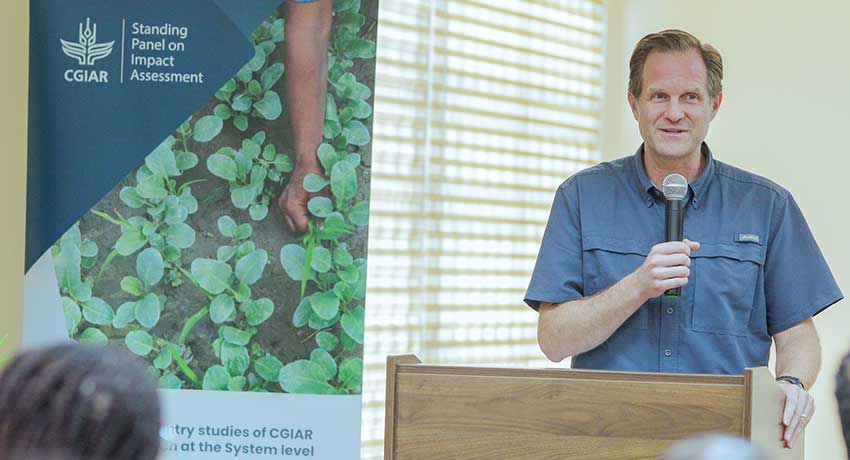
The Institute of Statistical, Social and Economic Research (ISSER) hosted a high-level workshop on agricultural development and impact assessment organised by the CGIAR system’s Standing Panel on Impact Assessment (SPIA). Featuring a keynote address by Prof. Robert Darko Osei, Director of ISSER and member of SPIA, and a high-level panel discussion chaired by Prof. Travis Lybbert, Chair of SPIA, the workshop brought together SPIA members, researchers, policymakers, and key stakeholders in the agriculture sector to examine pathways for strengthening agricultural transformation in Ghana and across Africa.
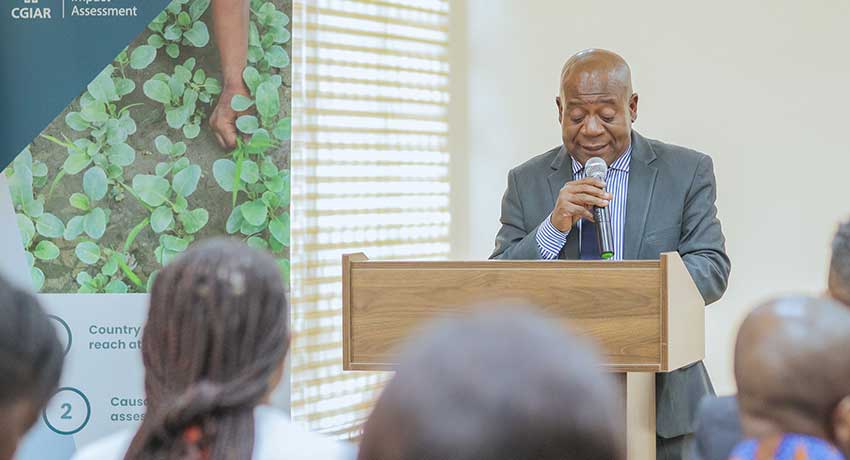
Opening the workshop, Prof. Samuel Nii Ardey Codjoe, Provost of the College of Education, University of Ghana, noted that the event aligned with the University-wide observation of the 2026 Day of the Scientific Renaissance of Africa under the theme "Sustainable Development: Research, Collaborate, Empower." He emphasised that the workshop reflected the University's commitment to research that delivers impact through strategic partnerships and generates evidence capable of informing policies and investments for sustainable development.
Keynote assesses Ghana's agricultural trajectory
The keynote address by Prof. Robert Darko Osei examined Ghana's agricultural development trajectory and outlined priority areas for accelerating transformation. He noted that while Ghana has recorded improvements in agricultural productivity, significant gaps remain between current performance and the sector's potential. He cautioned that a declining agriculture share of GDP should not be interpreted as successful structural transformation, noting that genuine transformation requires a shift into higher-productivity sectors that generate sustainable economic growth.
Drawing on national and household-level evidence, Prof. Osei highlighted progress in crops such as cassava and yam, while noting persistent productivity gaps in maize, rice, tomatoes, onions, cocoa, and cashew. Ghana's continued dependence on imports of several food commodities despite strong domestic demand, he noted, points to significant opportunities for expanding local production.
He identified critical investment priorities including agricultural research and development, improved access to quality seeds, increased fertiliser use, expanded irrigation, mechanisation, stronger extension services, and digital technologies to support farmers. He stressed that smallholder farmers must remain at the centre of these efforts, as improving their productivity is essential for agricultural growth, poverty reduction, and Ghana’s broader structural transformation agenda.
Regional perspectives on agricultural research and development
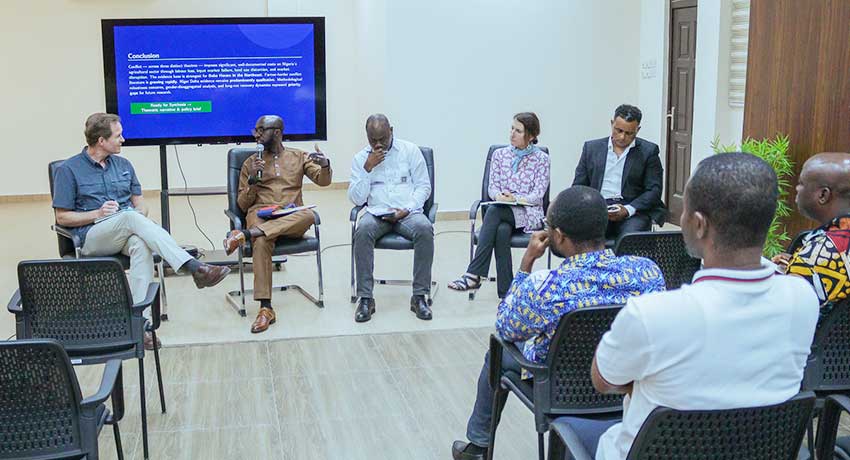
Prior to the panel, Prof. Michael Osei Adu of the University of Ghana presented findings on Ghana's agricultural innovation landscape under the CGIAR innovation mapping initiative. He highlighted the persistent gap between research outputs and farm-level adoption, stressing the need for stronger connections among researchers, policymakers, extension agents, private sector actors, and farming communities.
The high-level panel discussion chaired by Prof. Travis Lybbert brought together scholars from the University of Cape Coast, University of Cape Town, Cornell University, and Université Félix Houphouët-Boigny in Côte d'Ivoire. Discussions highlighted the need for stronger national research systems, improved coordination between researchers and policymakers, and farmer-centered approaches to agricultural innovation.
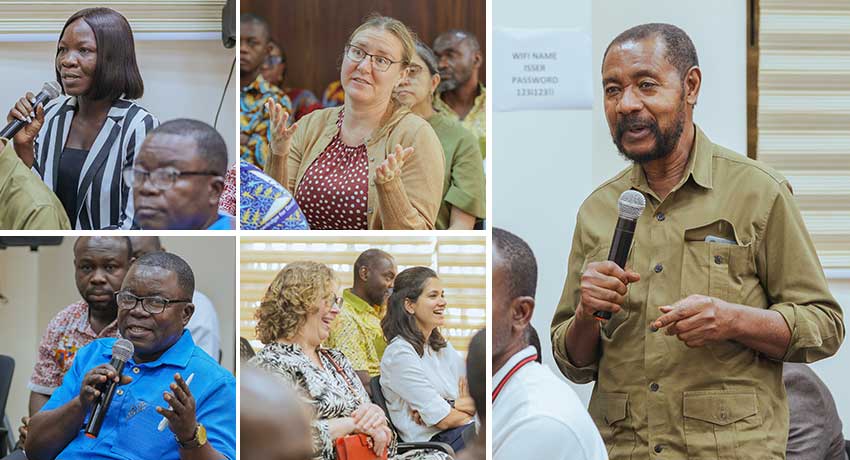
Panellists also explored opportunities presented by digital technologies and artificial intelligence in strengthening agricultural advisory services, while noting the importance of addressing challenges related to infrastructure, accessibility, and effective implementation.
Strengthening the evidence base for action
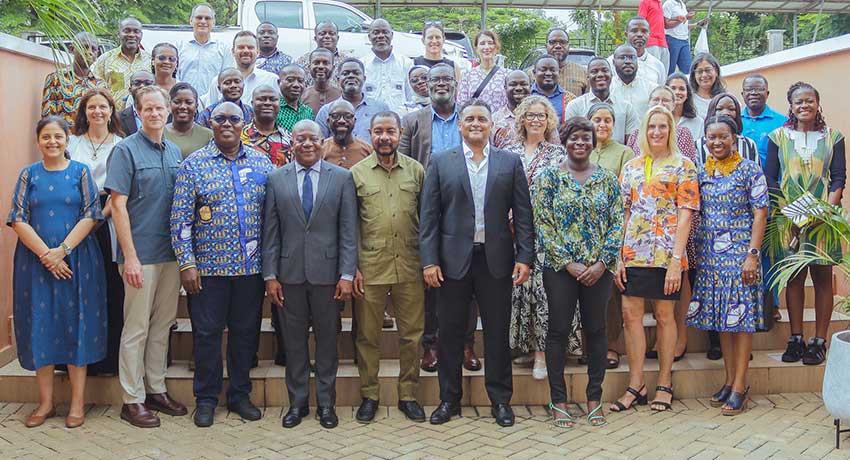
Held on 19 June 2026 at the ISSER Conference Facility, the workshop highlighted the importance of rigorous evidence in shaping agricultural policies and investments. It also underscored a shared commitment to ensuring that research translates into practical solutions that empower farmers, strengthen food security, and support inclusive economic transformation in Ghana and across Africa.
- Log in to post comments