



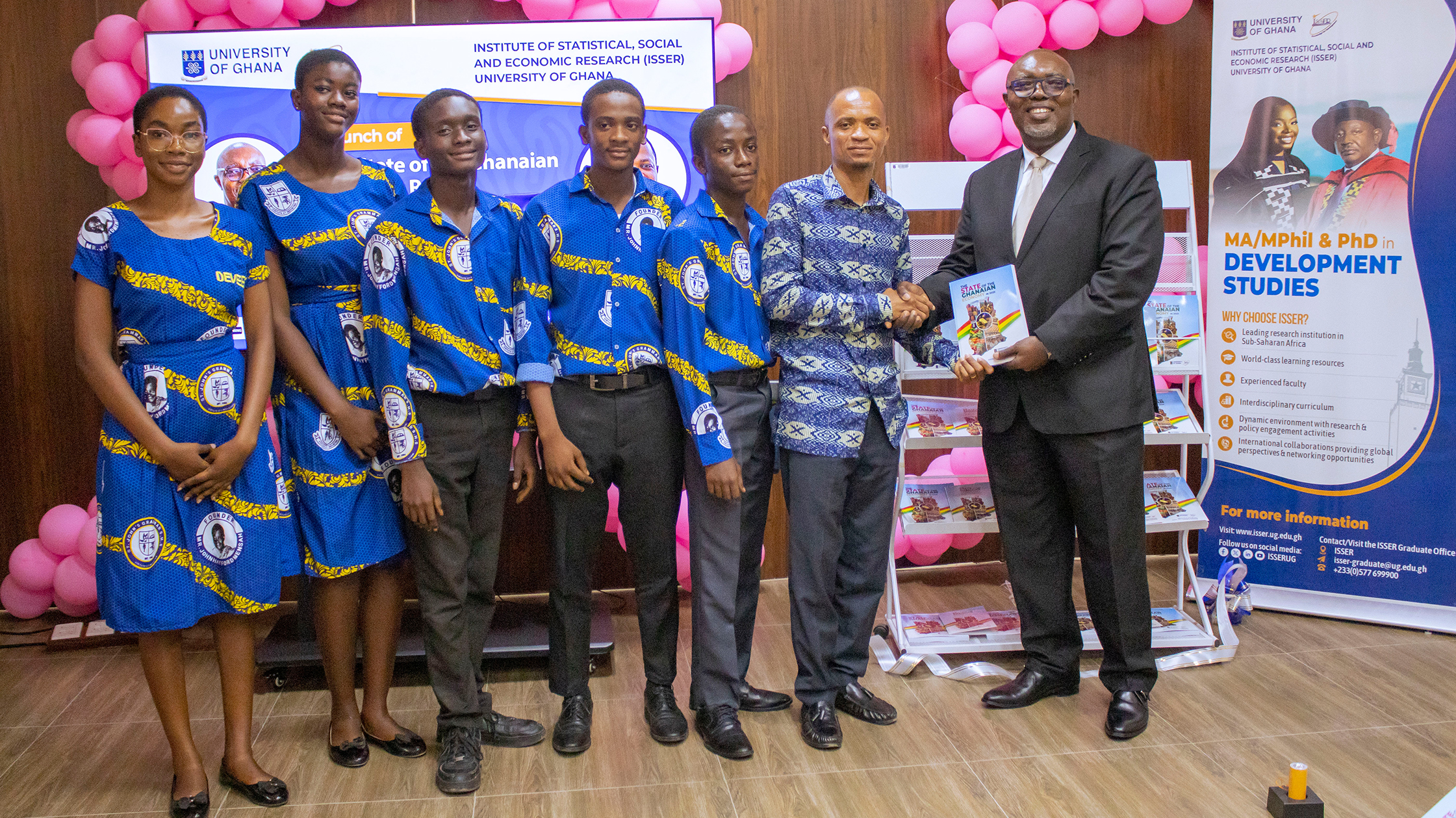
Prof. Robert Darko Osei, ISSER Director, presents a copy of SGER 2025 to Prof. Joseph Yaro, Provost of ISSER’s academic college, the College of Humanities, who joined other dignitaries at the launch.
The Institute of Statistical, Social and Economic Research (ISSER), University of Ghana, has launched the 2025 State of the Ghanaian Economy Report (SGER 2025), the 35th edition of its flagship annual publication. The launch also marked the introduction of the first-ever SGER Highlights Edition, designed to make the report’s key findings more accessible to a wider audience.
The event was chaired by Madam Belinda Boamah, Deputy Managing Director (Business and Operations) of the National Investment Bank (NIB). Held on Tuesday, 20 October 2026, at the ISSER Conference Facility, University of Ghana, Legon, it brought together representatives from government, development partners, academia, the private sector, civil society and the media, as well as university leaders.
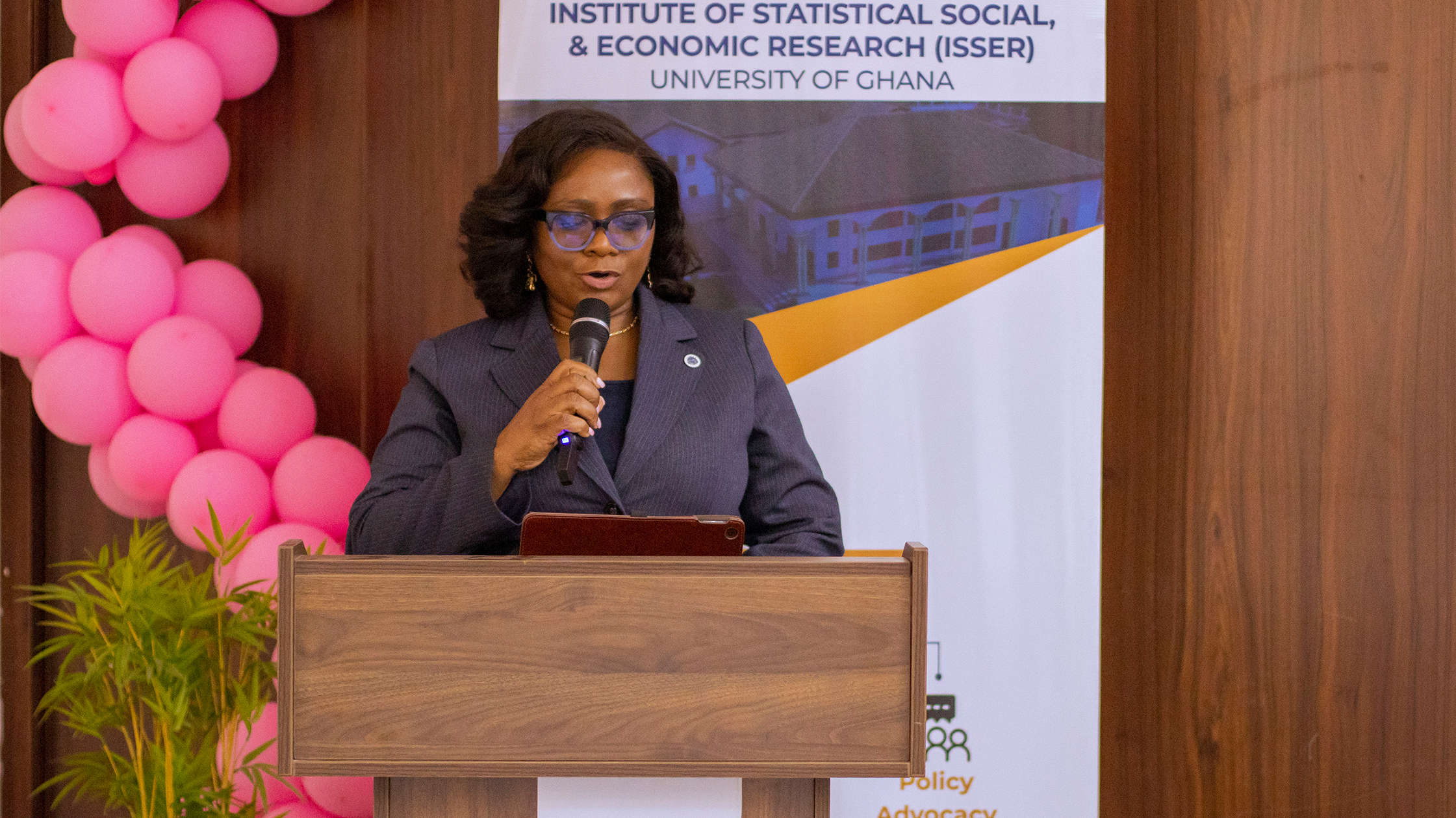
In her opening remarks, Madam Boamah commended ISSER for sustaining the SGER tradition over 35 years. She underscored the importance of research in informing policy, strengthening accountability and ensuring that the country’s mineral wealth contributes to meaningful development outcomes.
ISSER Director, Prof. Robert Darko Osei, and Head of the Economics Division, Prof. Fred Dzanku, presented an overview of the report, highlighting improvements in Ghana’s macroeconomic performance in 2025. They emphasised the need to consolidate the recovery through productive investment and policies that support sustainable economic transformation. Key priorities identified in the report include strengthening domestic production, diversifying exports and promoting investment.
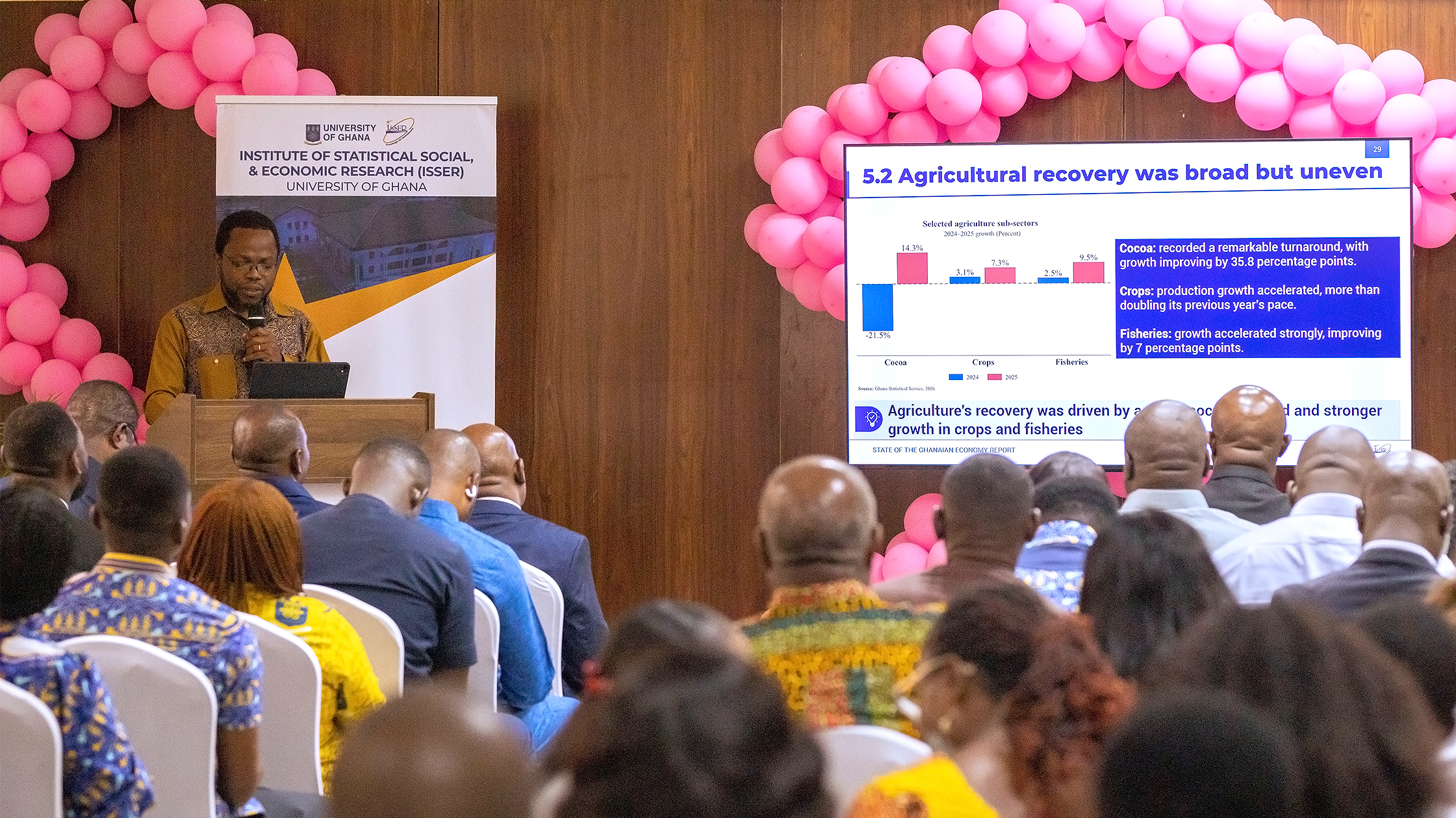
A special chapter, Mineral Proceeds and Economic Development in Ghana, examines whether Ghana is translating its mineral wealth into meaningful development outcomes. It finds that increased mineral revenues have not consistently translated into higher public investment and social spending.
The report calls for stronger mineral revenue mobilisation, greater transparency and accountability, timely transfers to mining communities, prudent management of mineral windfalls and action to address the environmental liabilities associated with mining.
Following the presentation, participants engaged the authors in a question-and-answer session moderated by ISSER Research Fellow, Dr Ralph Armah. The discussion provided an opportunity to clarify the report’s findings and exchange perspectives on Ghana’s economic outlook and the policy choices needed to sustain the recovery and advance development.
Making the findings more accessible

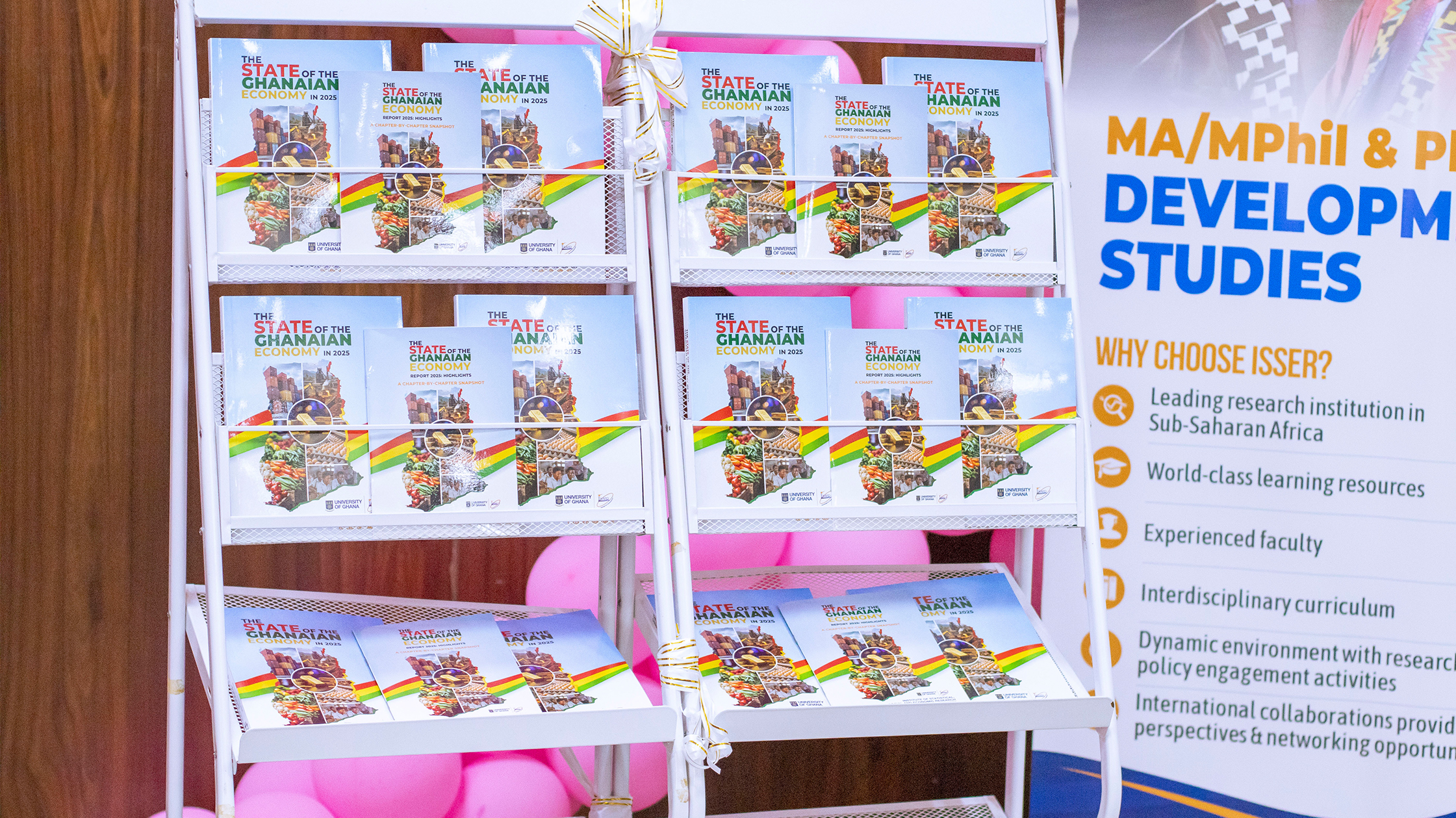
The launch also introduced the first-ever SGER Highlights Edition, which provides a chapter-by-chapter snapshot of the report’s eight chapters, making its key findings easier to navigate and engage with.
In her closing remarks, Madam Boamah outlined four priorities for Ghana’s economic development: sustained fiscal discipline and credible, consistent policies; investment in productivity, competitive enterprise and decent jobs, particularly for young people; transparent and prudent management of mineral wealth, including saving during periods of strong revenues and decisive action against illegal mining; and the use of credible evidence to guide policy decisions.
She called on partners to invest in ISSER as critical research infrastructure and encouraged stakeholders to engage with the report’s findings to inform policy and support collaborative solutions.
“The quality of today’s discussion itself is a tribute to the report,” she said, describing the SGER as a public good. She urged policymakers, development partners, the private sector, academia, civil society and the media to “read it, test it, use it” to inform decisions and advance Ghana’s development.
Read more articles
- Log in to post comments